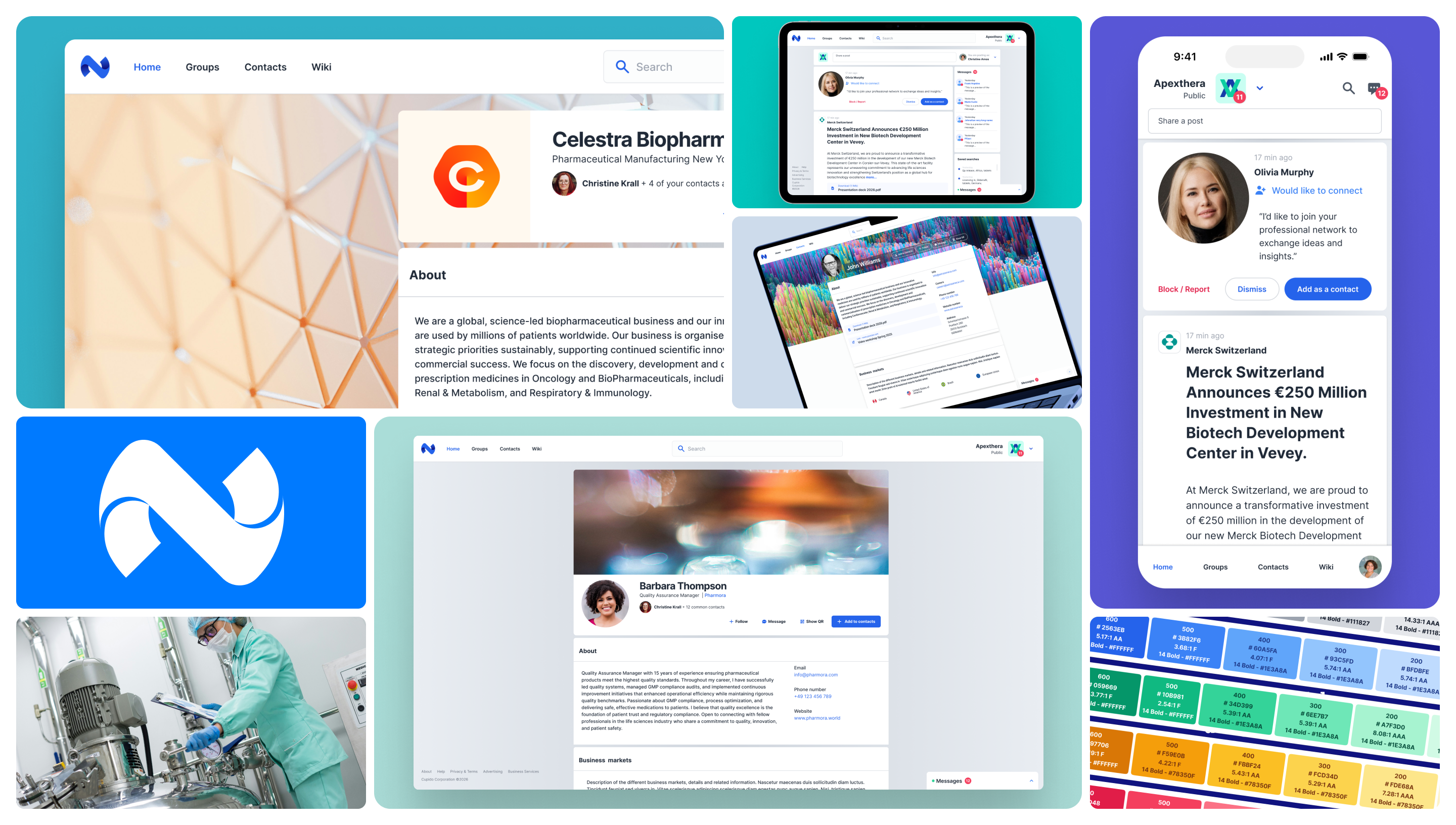

Nucleo
Designing an online workplace for the life science industry: connecting products, services, and people in one platform.
Life sciences is one of the most relationship-driven industries in the world, and one of the most dependent on physical presence to build those relationships.
Researchers find CRO partners at conferences. Suppliers meet distributors at trade shows. Regulatory consultants build their networks over years of industry events, not through a search bar.
The opportunity was clear: what if life sciences professionals could find jobs, partners, suppliers, papers, and collaborators online, without the trade show, without the flight, without the gatekeeping of who you happen to sit next to?
That's what Nucleo was built to do.
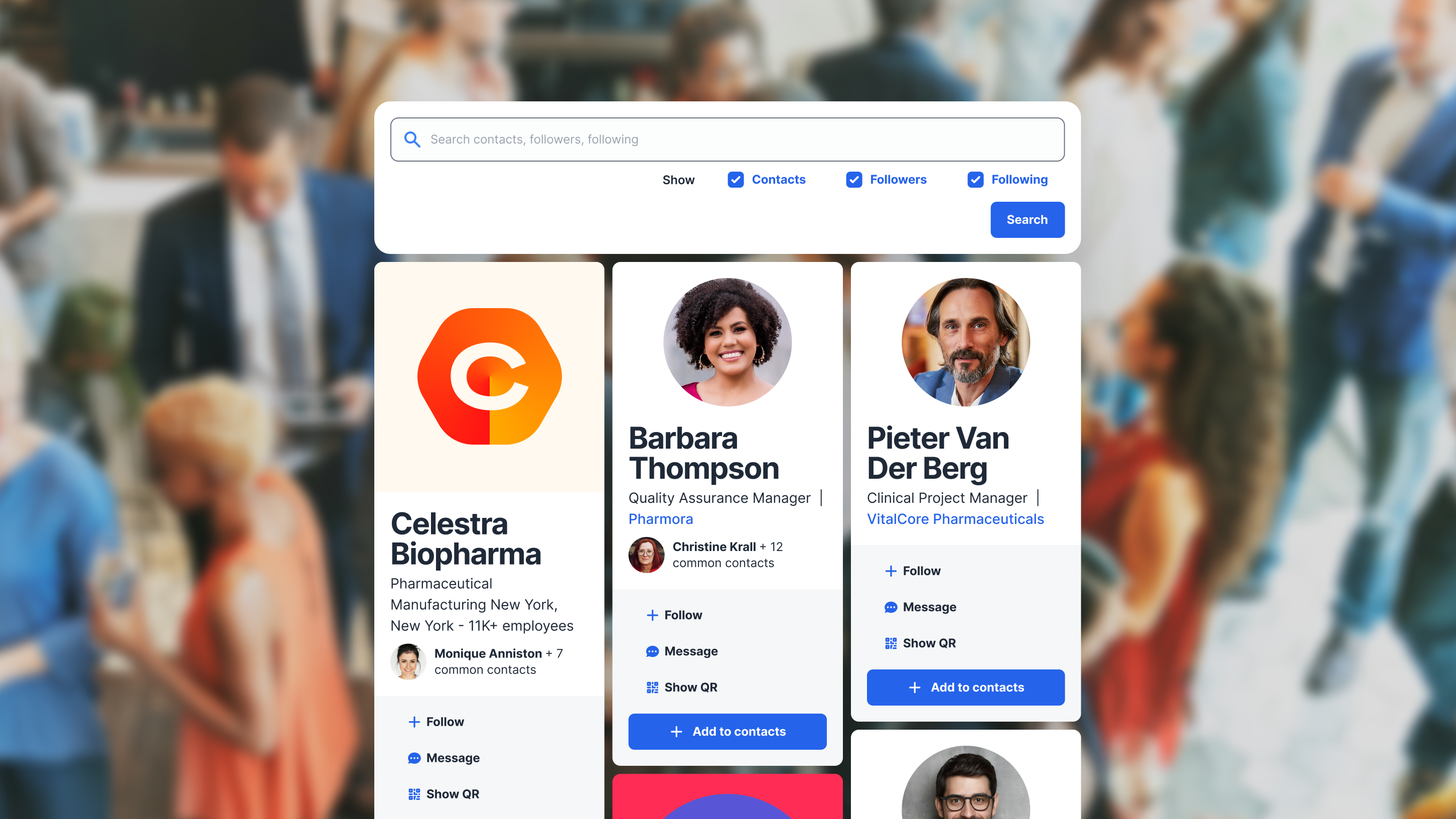
"Life sciences professionals operate in one of the most complex regulatory and terminological ecosystems in the world. And they navigate most of it offline."
I went into this project expecting a platform design challenge. The research revealed something harder. Three structural barriers explained why life sciences had never been brought online properly.
No shared language. The same product, role, or concept gets described differently depending on the country, regulatory body, or context. Two professionals looking for the same thing may use entirely different approaches.
No universal structure. There's no common taxonomy. A "drug" in one market is a "dietary supplement" in another. Regulatory bodies operate independently, classification systems don't interoperate, and local legal context overrides global convention at every level.
Offline by default. Professional networking in life sciences still runs through trade shows, conferences, and personal networks. Digital directories exist, but they're fragmented. What this meant for design? Before designing a single interface, we had to design the taxonomy. Before building a networking platform, we had to define the shared language that would make networking possible. This is not only a UX challenge. It's also a strategic one.
I assumed the industry ran on interoperable standards, that terminology, classifications, and taxonomies were globally aligned at their core. The research proved otherwise.
ATC classifications vary by region. Regulatory frameworks don't just differ in requirements; they differ in how they define entire categories of products and services.
Nucleo doesn't serve one type of professional. It serves an ecosystem of five different archetypes.
Five distinct user groups emerged from research, each using the platform for fundamentally different purposes. All share one need: the right connection, found quickly, with reliable information.
The Researcher / Pharma scientists / Academic institutions / CROs. Looks for credible research partners and clinical trial collaborators. Currently finds them through conferences and published papers. Needs: verified credentials, research focus, institutional affiliation.
The Builder / Business Development / Licensing / Corporate Executives. Navigates licensing opportunities and cross-market partnerships across multiple regulatory environments. Needs: market intelligence, partner discovery, compliant contact.
The Operator / CMOs / Distributors / Suppliers / Logistics. Needs to be discoverable by the right buyers, and find qualified supply chain partners with verified capabilities. Currently relies on trade directories and trade shows. Needs: visibility, verified listings, capability matching.
The Navigator / Regulatory Affairs / Compliance / Market Access. Connects with professionals who understand a specific regulatory context. Needs hyper-specific expertise that varies by country and product type. Needs: role-verified contacts, jurisdiction filters.
The Talent Market / Companies hiring / Professionals seeking roles. Life sciences hiring is as specialized as the industry itself. Needs: verified company profiles, role-specific search, industry-native job listings, background check, references.
Every archetype operates in a different vocabulary, under different regulations, with different definitions of what they're looking for. No existing platform was built to account for all of them simultaneously.
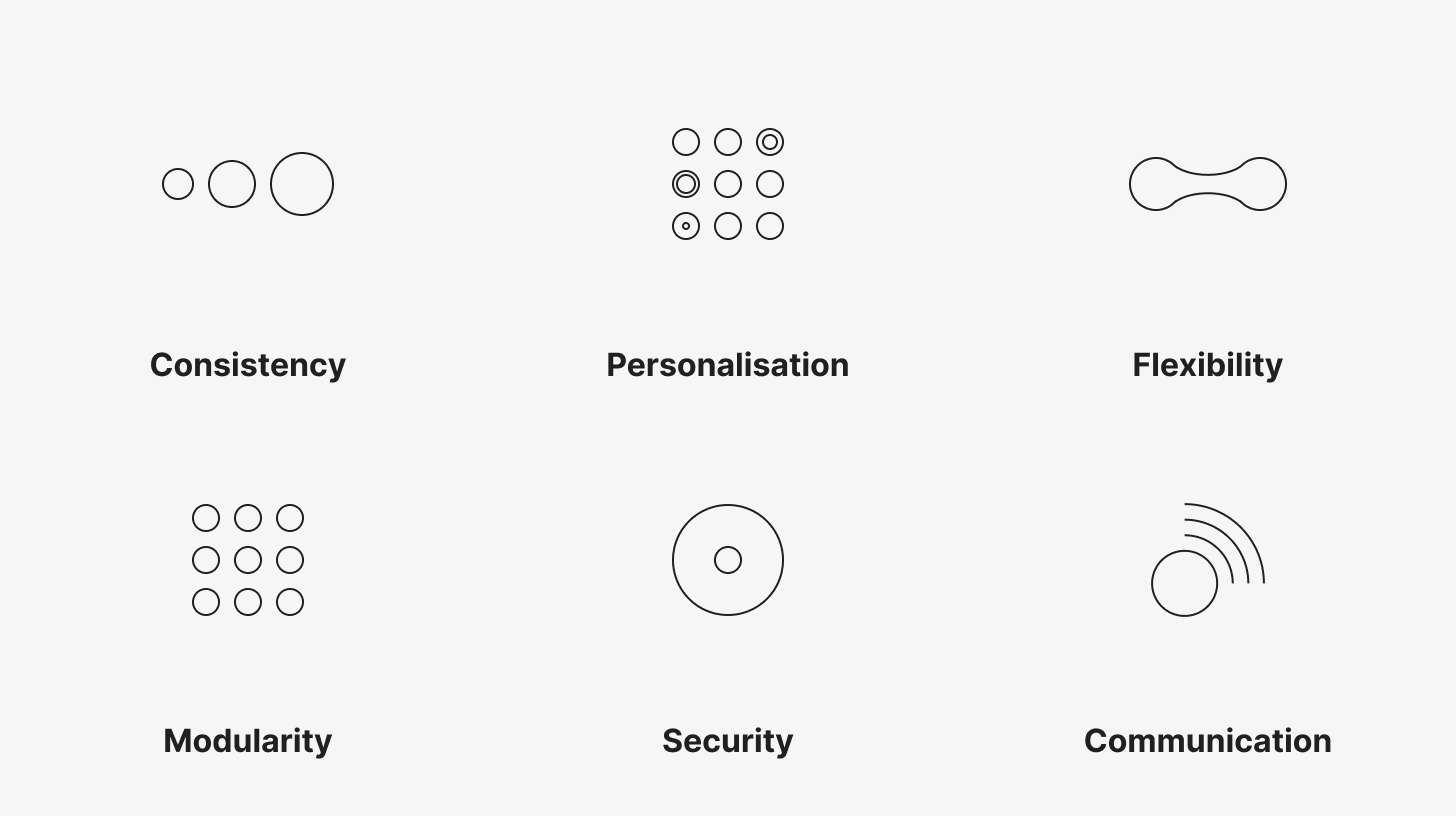
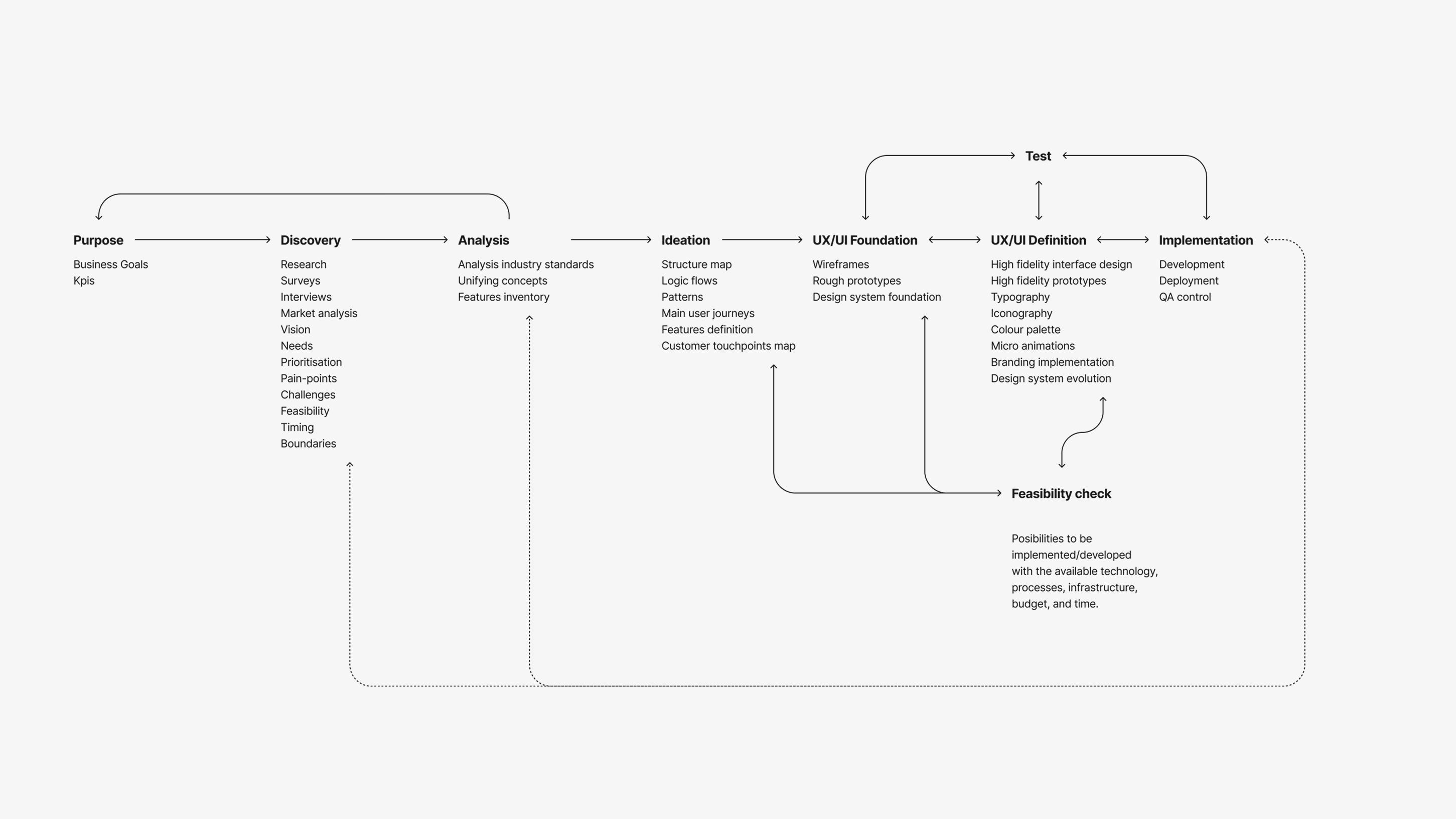
Taxonomy-First Architecture
Before any screen was designed, we built the vocabulary layer, mapping industry terms, product categories, and professional roles into a unified classification system. The sitemap, navigation, and search logic couldn't be built until this was stable. Without it, search returns inconsistent results and professionals using different terminology for the same thing remain invisible to each other.
Context-Aware Modularity
The same interface component presents different information, different filters, and different actions depending on the user's role and geographic context. A regulatory affairs professional in Germany and a pharma sales manager in Brazil use the same platform, but they don't see the same platform. A single rigid interface would be wrong for every market. Context-awareness is what allows Nucleo to serve a global, multi-regulatory industry without fragmenting into separate products.
Role-Sensitive Information Density
Enterprise users manage more entities, more relationships, and more compliance requirements. Solo professionals need a lighter footprint. Feature parity is not experience parity: showing the same volume of information to a solo consultant and a procurement manager at a global CMO is a failure of design, not a neutral default.
Trust
is the fourth constraint that cuts across all three: in a regulated industry where compliance failures carry legal and reputational risk, professionals don't connect with unverified sources. Verification isn't a feature; it's the prerequisite for any of the above to work.
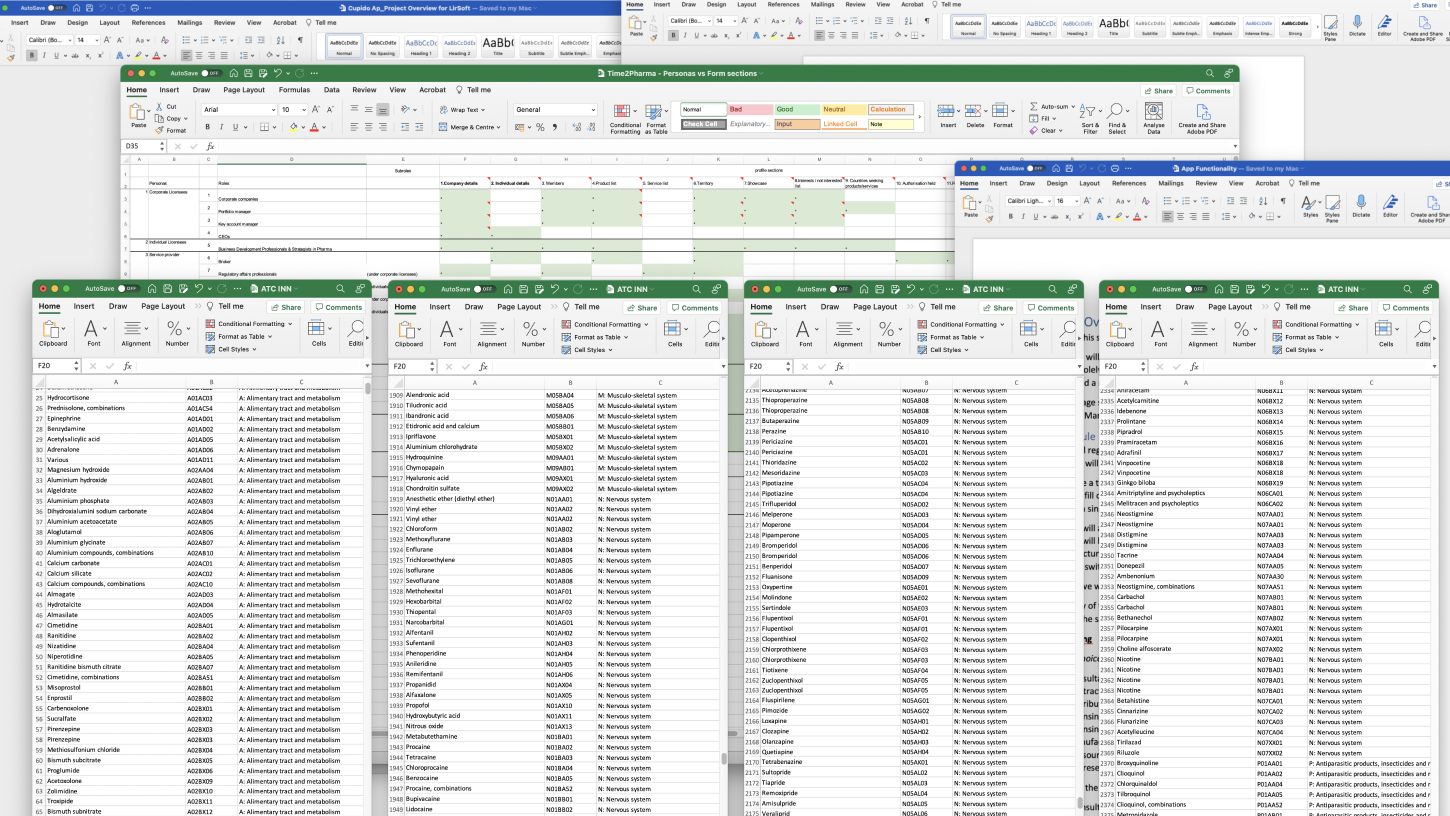
Feature-first architecture reflects how a product team thinks. Taxonomy-first architecture reflects how users already think about their work.
Sitemap. The sitemap was derived from the taxonomy: we first mapped what categories of information, relationships, and actions existed in the industry, then organized the platform around those categories.
Profile Architecture. Profiles in Nucleo are not forms; they're assemblies. Instead of a fixed template every user fills the same way, profiles are built from modular blocks: a researcher composes a very different profile than a CMO, which looks nothing like a distributor's listing. Each block is optional, stackable, and role-relevant. This gives users three things a fixed profile can't: the freedom to show only what matters, the ability to represent a genuinely complex professional identity, and a profile that reads as credible to the person viewing it.
Wireframes. Wireframes were structural decisions made visible, not visual explorations. Each screen was built on three foundations: the content audit, the research findings, and the taxonomy framework.
Interface and Design System. The design system is built on the same modular logic as the platform itself. Tokens define the foundation: color, typography, spacing, and elevation. Components are built on top of those tokens, each one context-aware and composable. Patterns emerge from combining components. This approach means every new screen, feature, or market extension gets designed by combining what already exists, not by starting over.
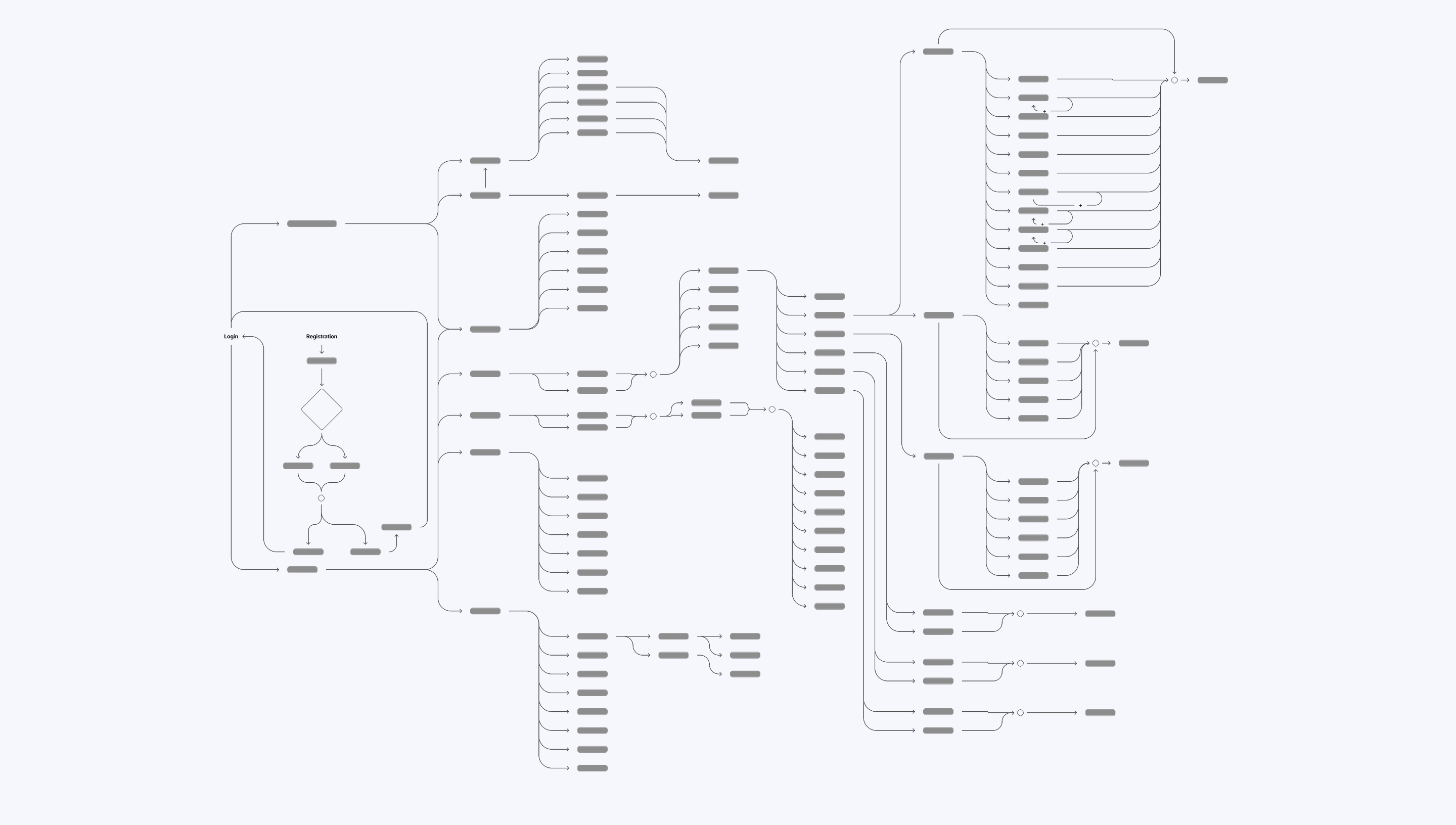
Final sitemap (Specific content details are withheld due to NDA)
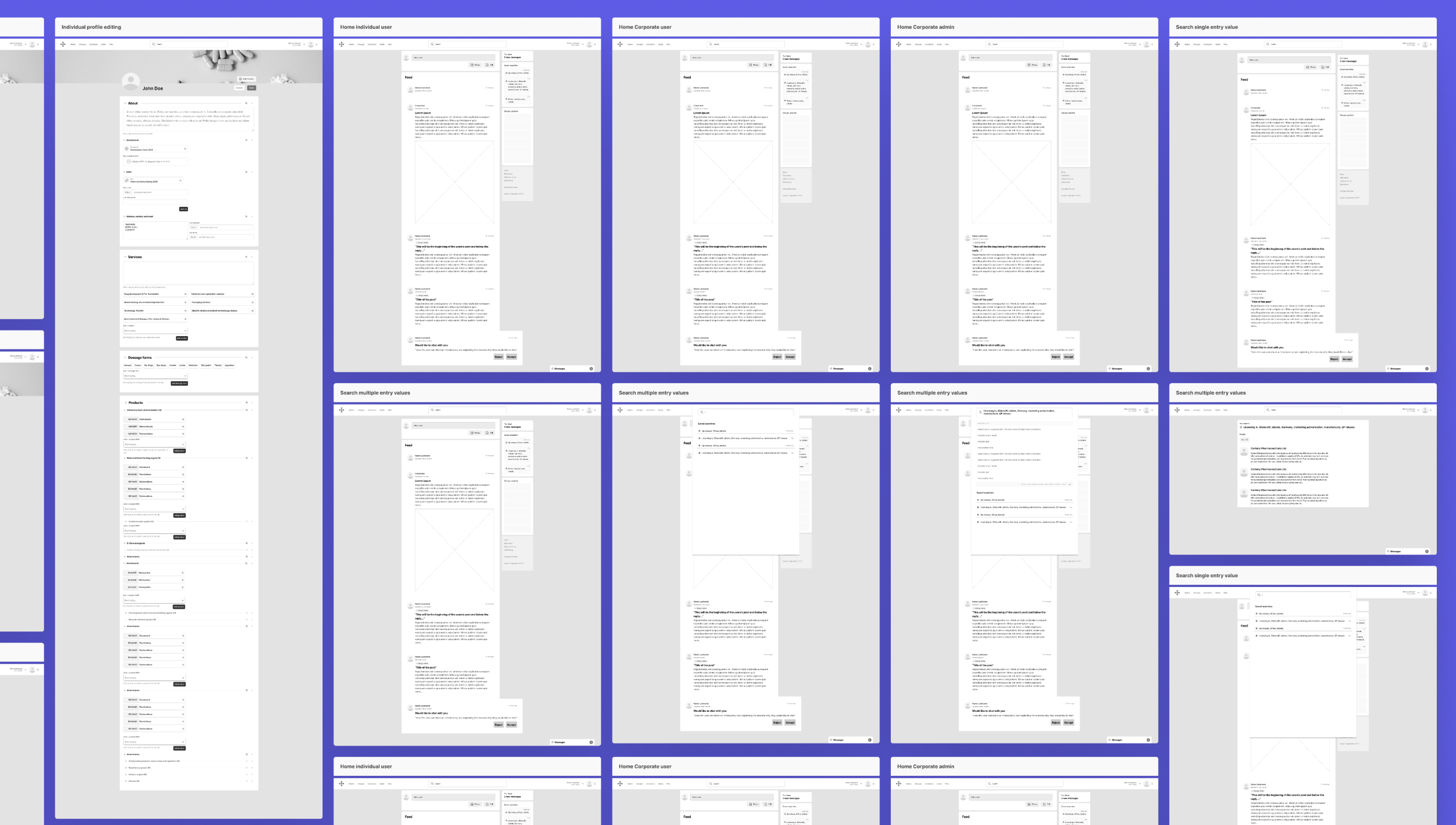
Wireframes were structural decisions made visible based on the content audit, research findings, and taxonomy framework.
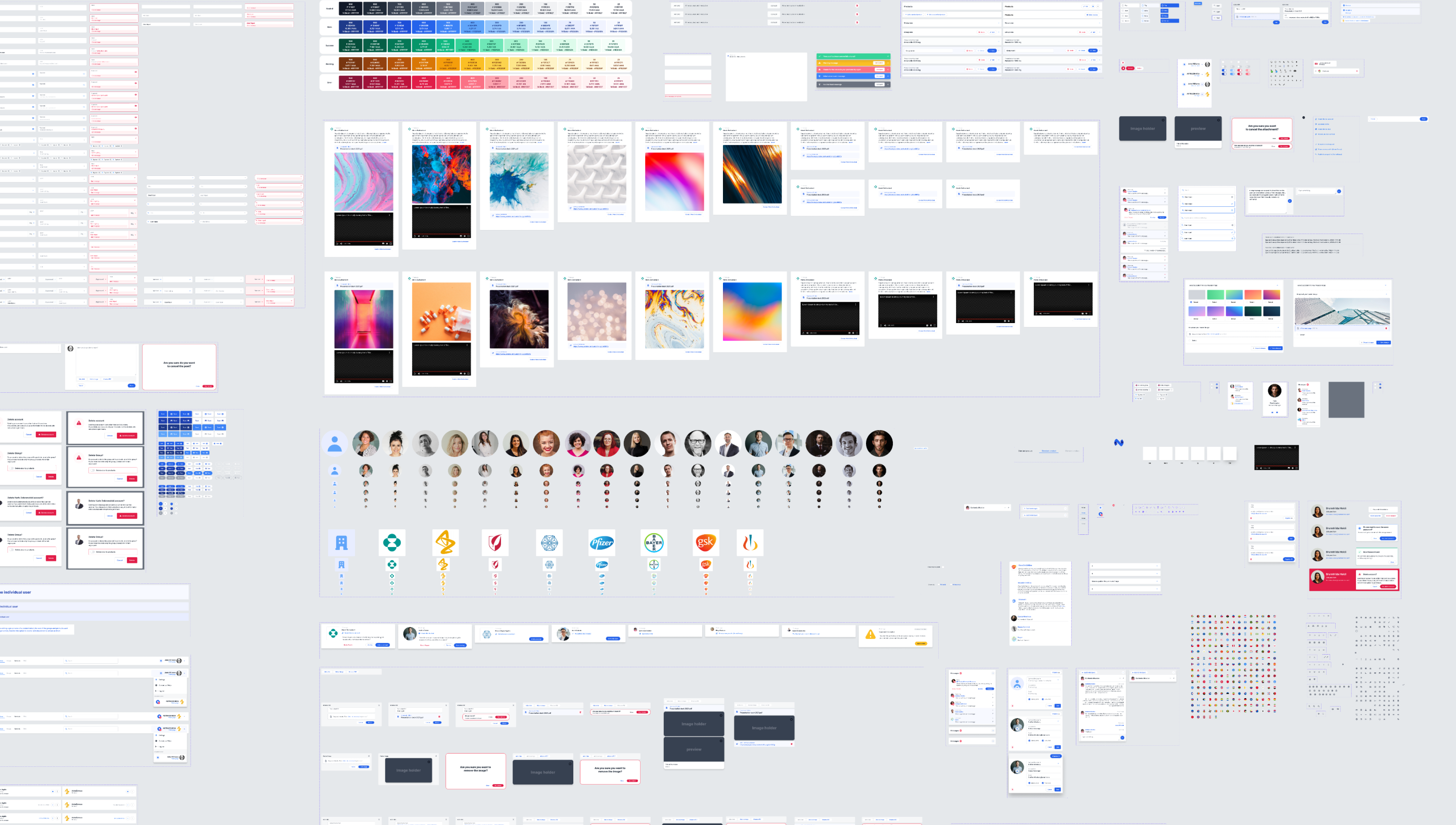
Details of the components and placeholders of the design library
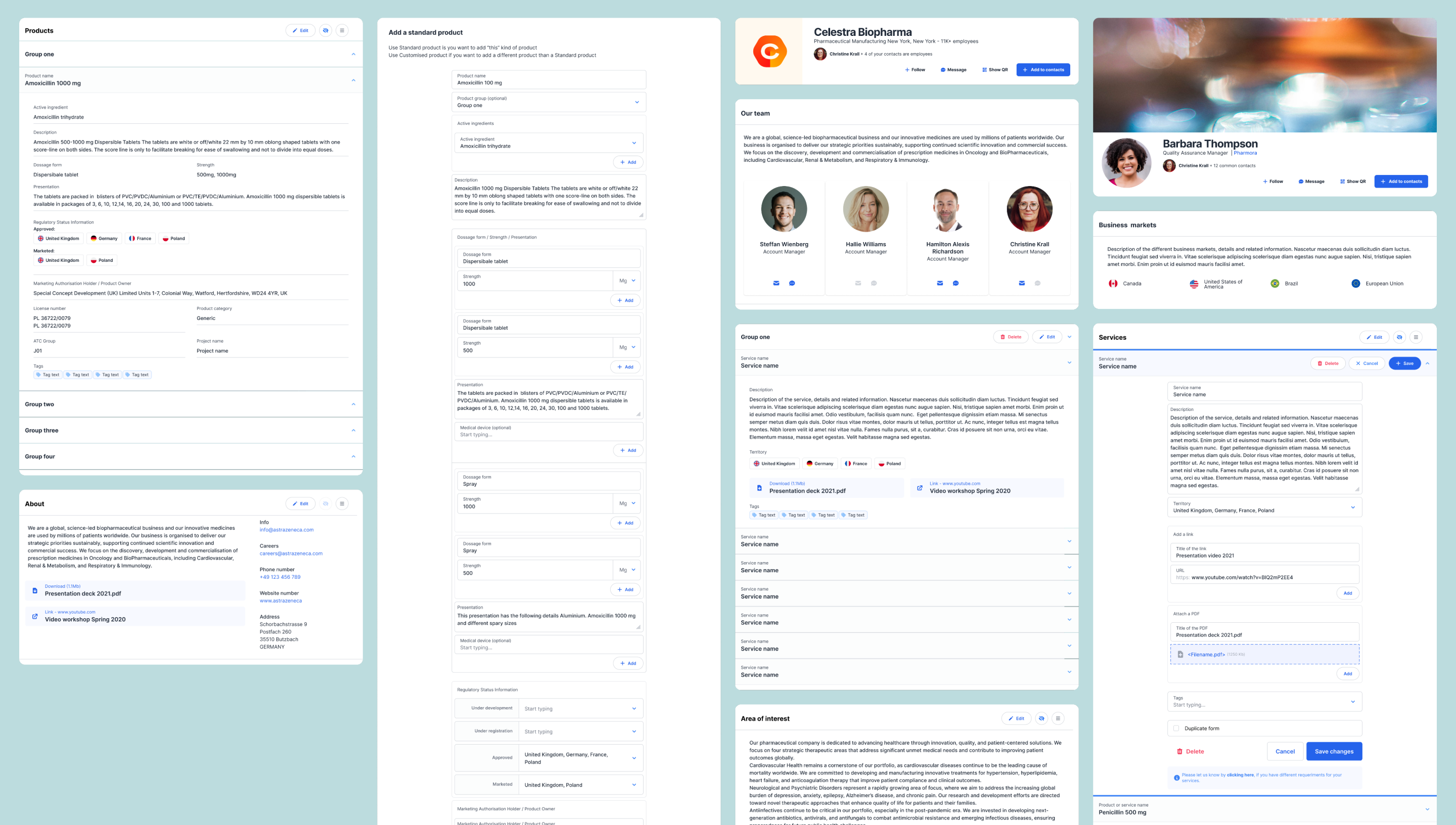
Profile modules that the user can add, remove, and arrange customize their profile as they need.
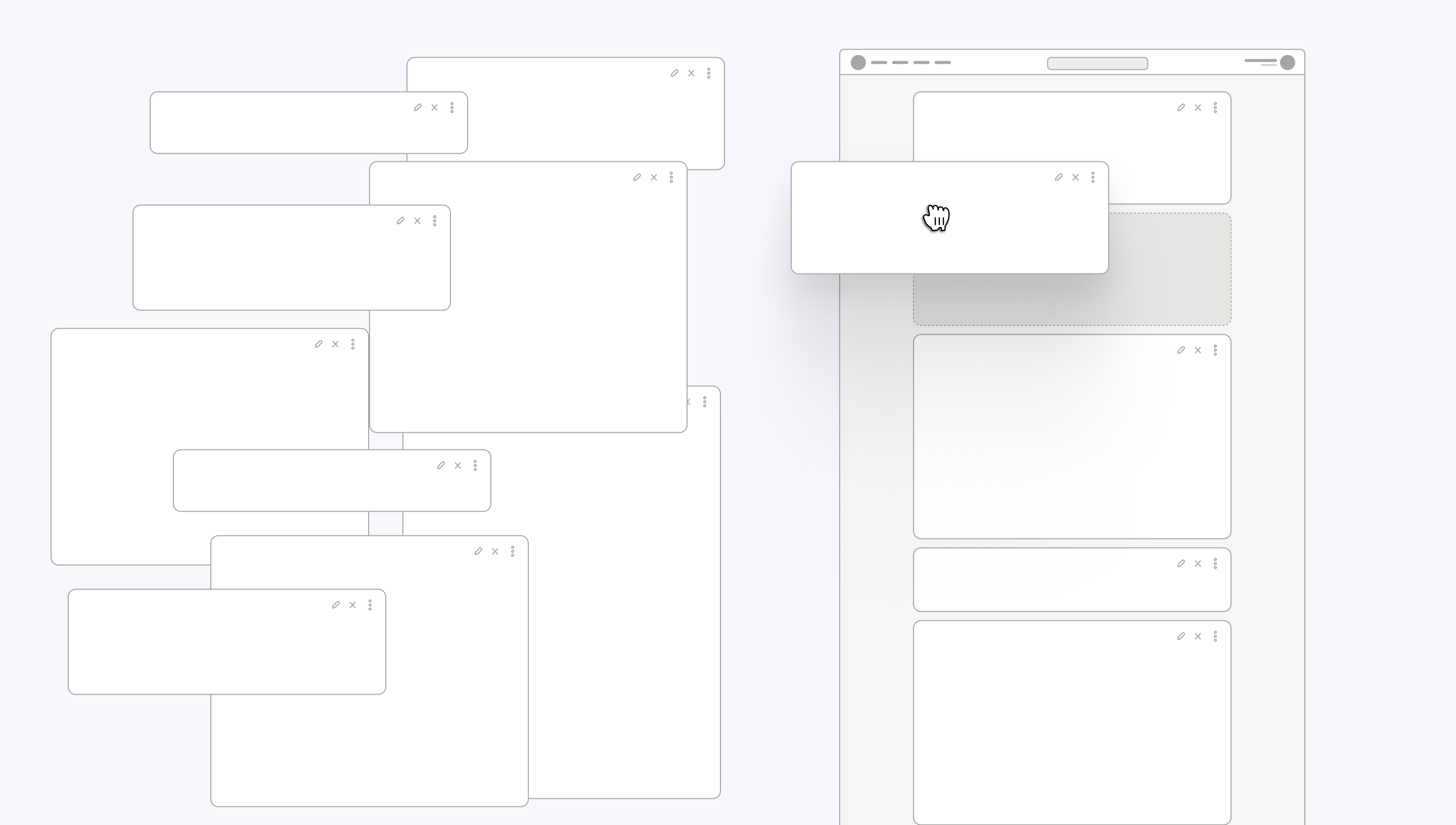
The flexibility of the platform allows the user to build their profile in a simple and fast way.
The final interface brings together every layer of the design work: the taxonomy, the modular architecture, the role-sensitive logic, and the design system.
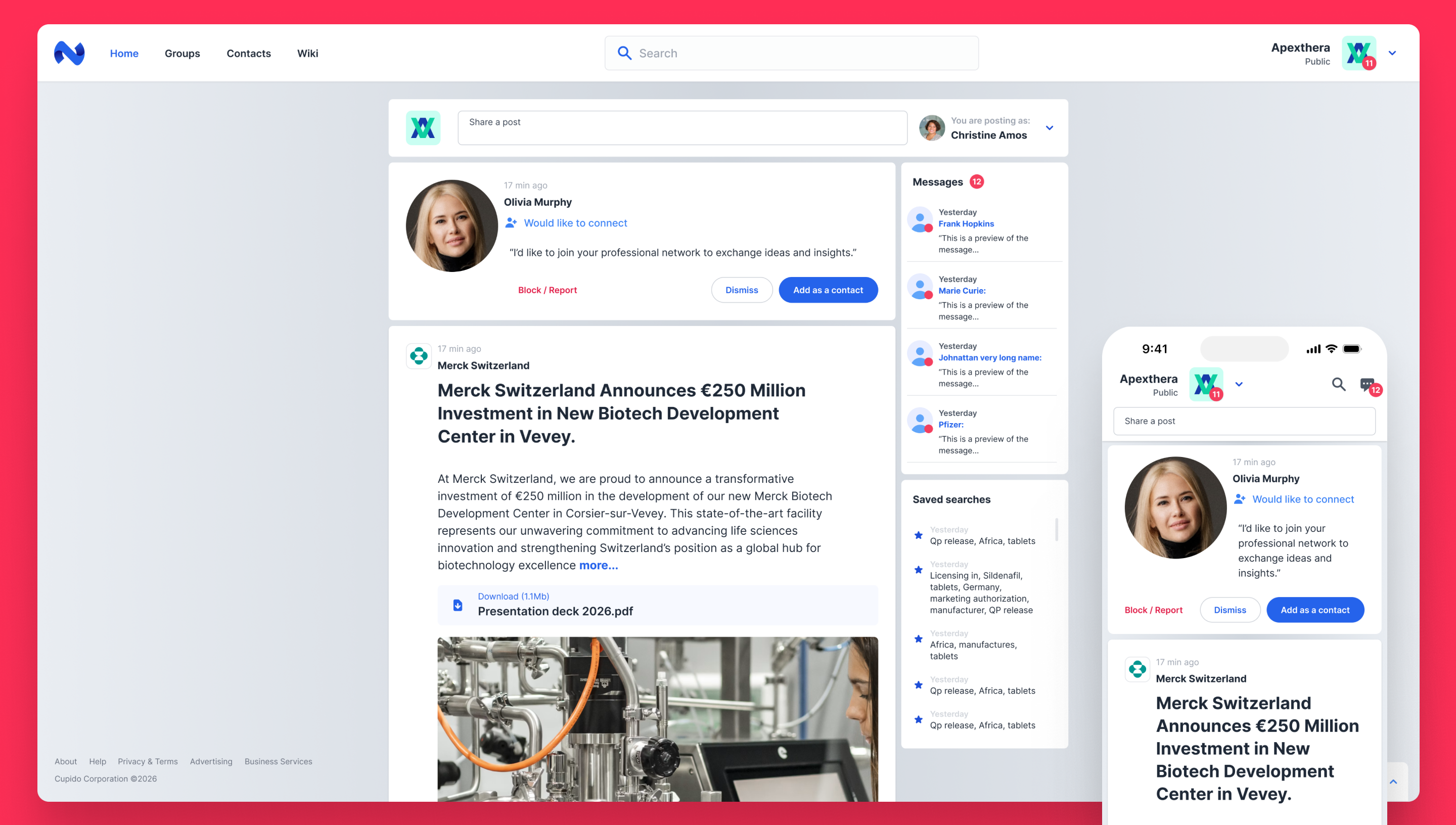
Corporate feed.
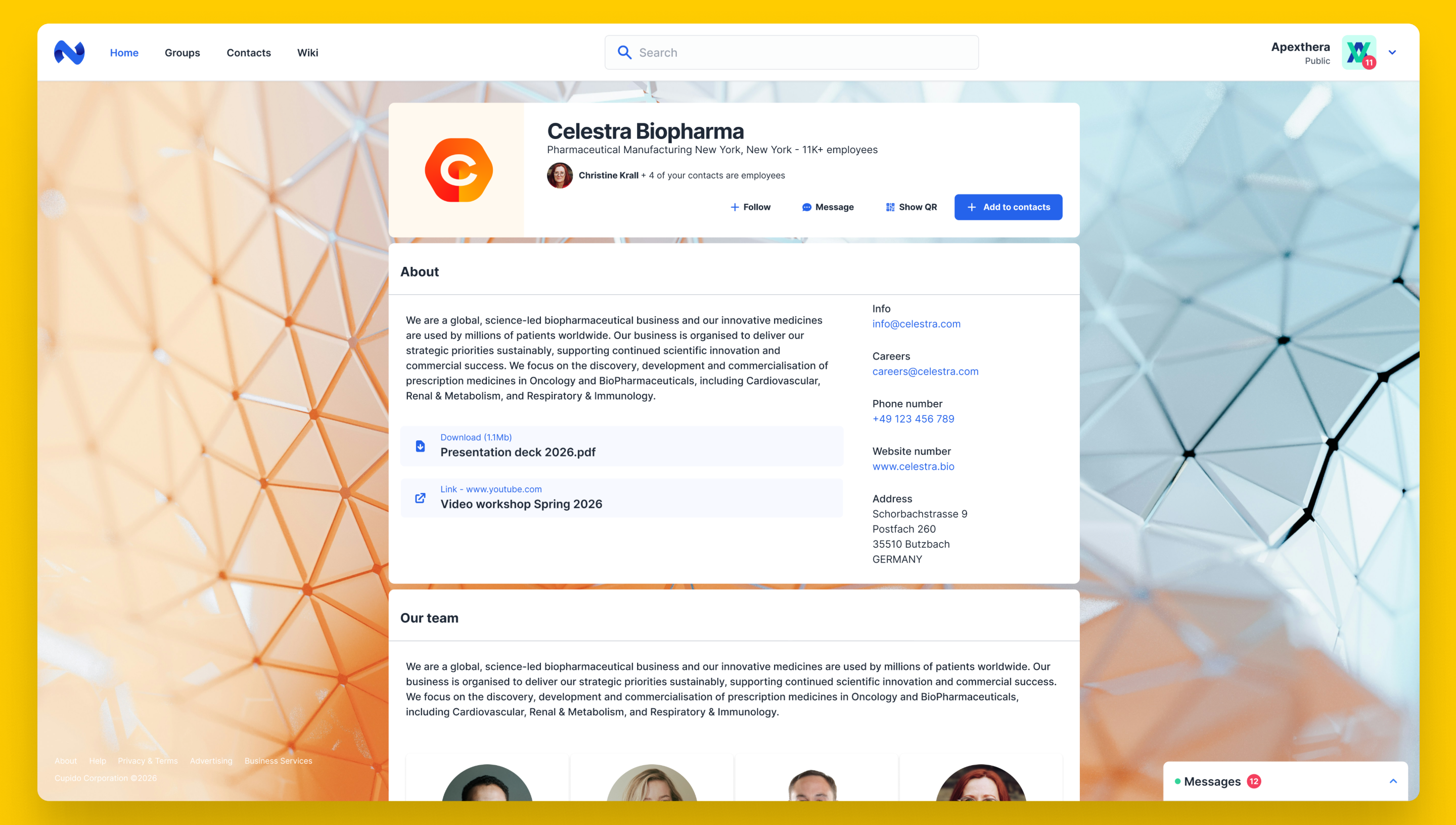
Corporate page.
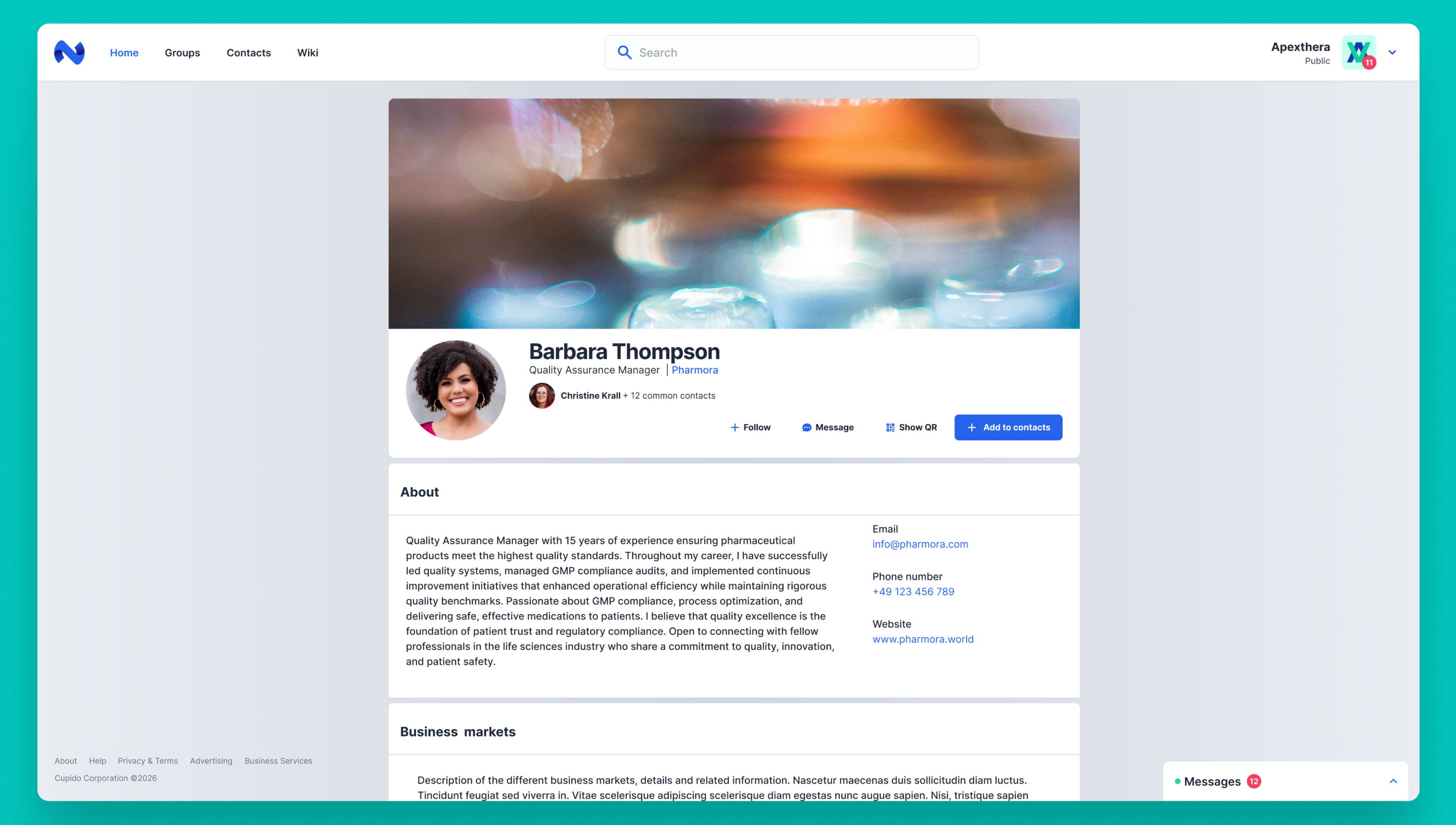
Personal page.
The Nucleo logotype and brand identity are covered separately.
If you want to see how the name became a mark, visit the branding project.
Nucleo is pre-launch. Traditional metrics aren't the story here; the foundation is.
Before this project, the life sciences industry had no shared digital vocabulary for professional discovery. The taxonomy built here, mapping products, services, roles, and relationships into a structured classification system, is an artifact that didn't exist before. It now forms the architectural backbone of the platform.
The design system, the information architecture, and the modular component library are assets the company owns. They don't prove the product worked; they prove it was designed to work, with the evidence to show the thinking behind it.
Prototypes were validated with the project's own stakeholders: active life sciences professionals who live the problem the platform solves. In a specialized B2B industry, expert validation carries more signal than volume testing with general audiences.
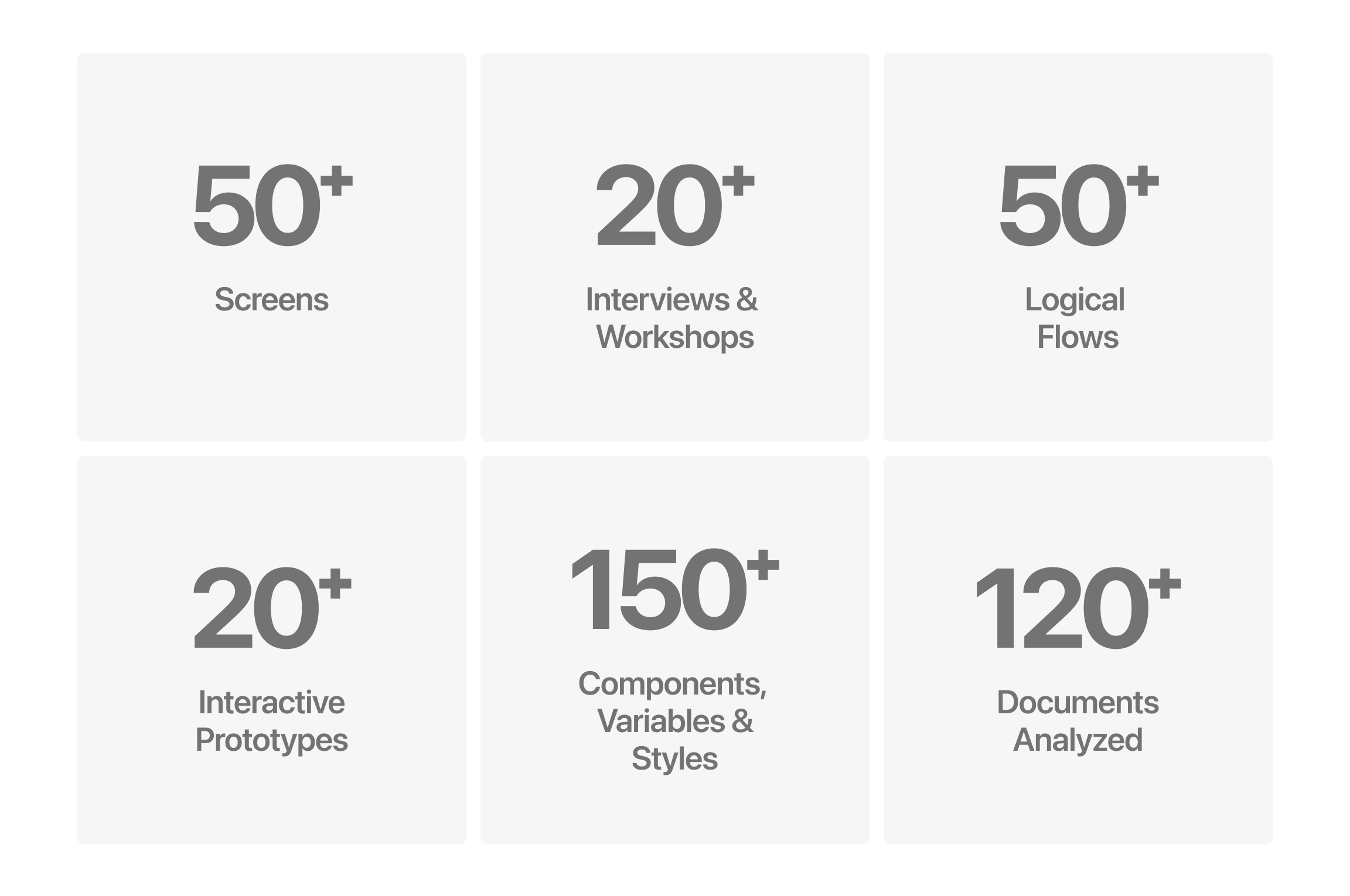
If I were starting Nucleo again, the first thing I'd do differently is to start as soon as possible to understand the full complexity of the industry's current state.
The research phase revealed a landscape far more fragmented (terminologically, regulatory, and structurally) than expected. What seemed like a platform design challenge turned out to be a taxonomy and classification challenge first. That discovery, while valuable, came mid-process. Starting there would have made every subsequent decision sharper.
Designing for a regulated, multi-market industry is not an interface problem. It's a knowledge architecture problem. The UX work is only as strong as the conceptual model underneath it.
