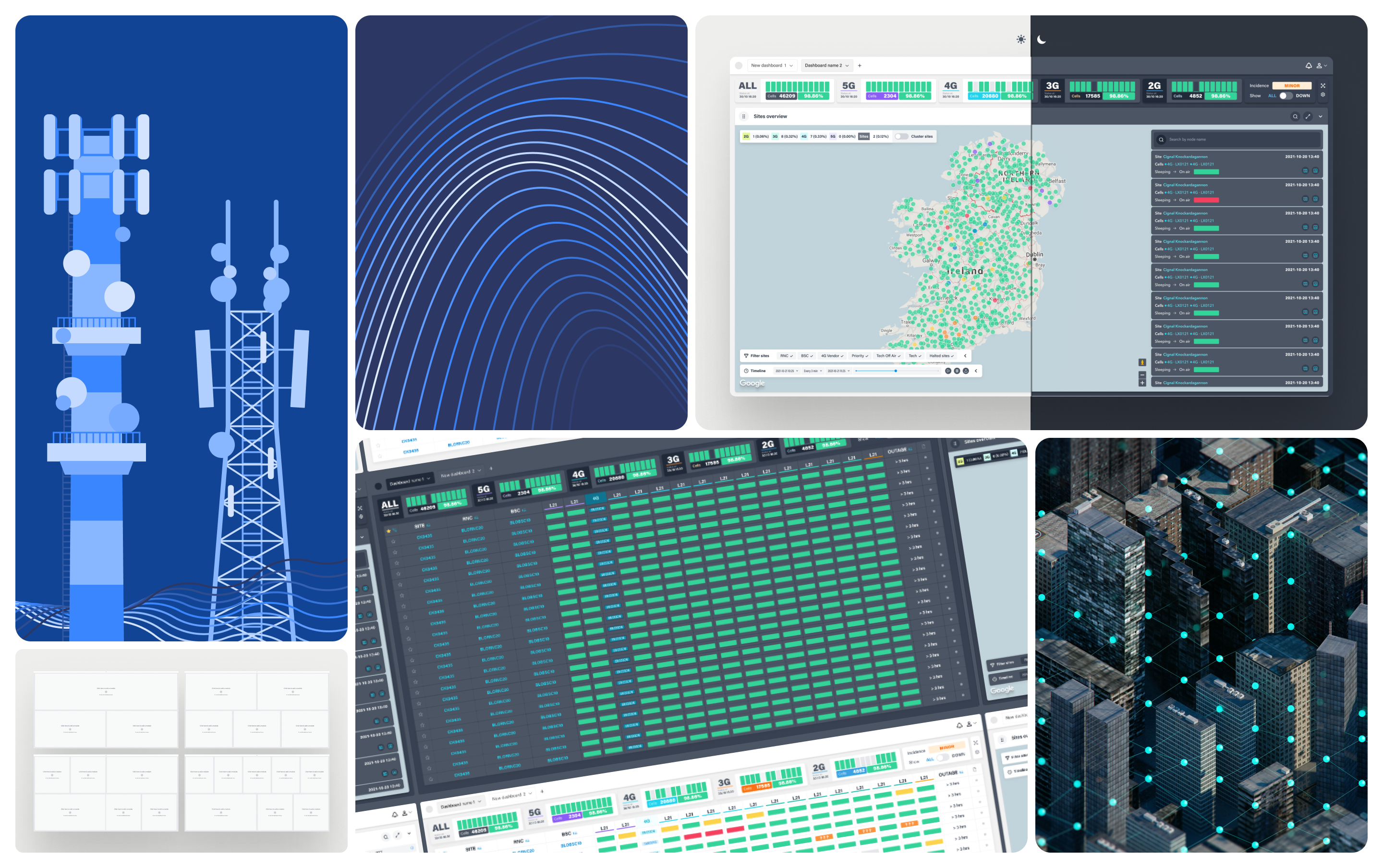

Visimetrix
“VisiMetrix monitors performance in real time, predicts where problems are heading, and enables teams to intervene before impact reaches customers.”
Every telecom network generates a constant stream of data including performance counters, threshold breaches, service alerts, geographic and device anomalies across thousands of nodes. The engineers watching it need to know, in real time, what's wrong, where it is, and how serious it is.
The executives above them need to know whether the network is healthy or not without having to interpret each KPI individually.
VisiMetrix is a platform that monitors, analyses, and visualizes network performance across multi-vendor telco infrastructure, turning raw data into actionable intelligence for the teams that keep networks running.
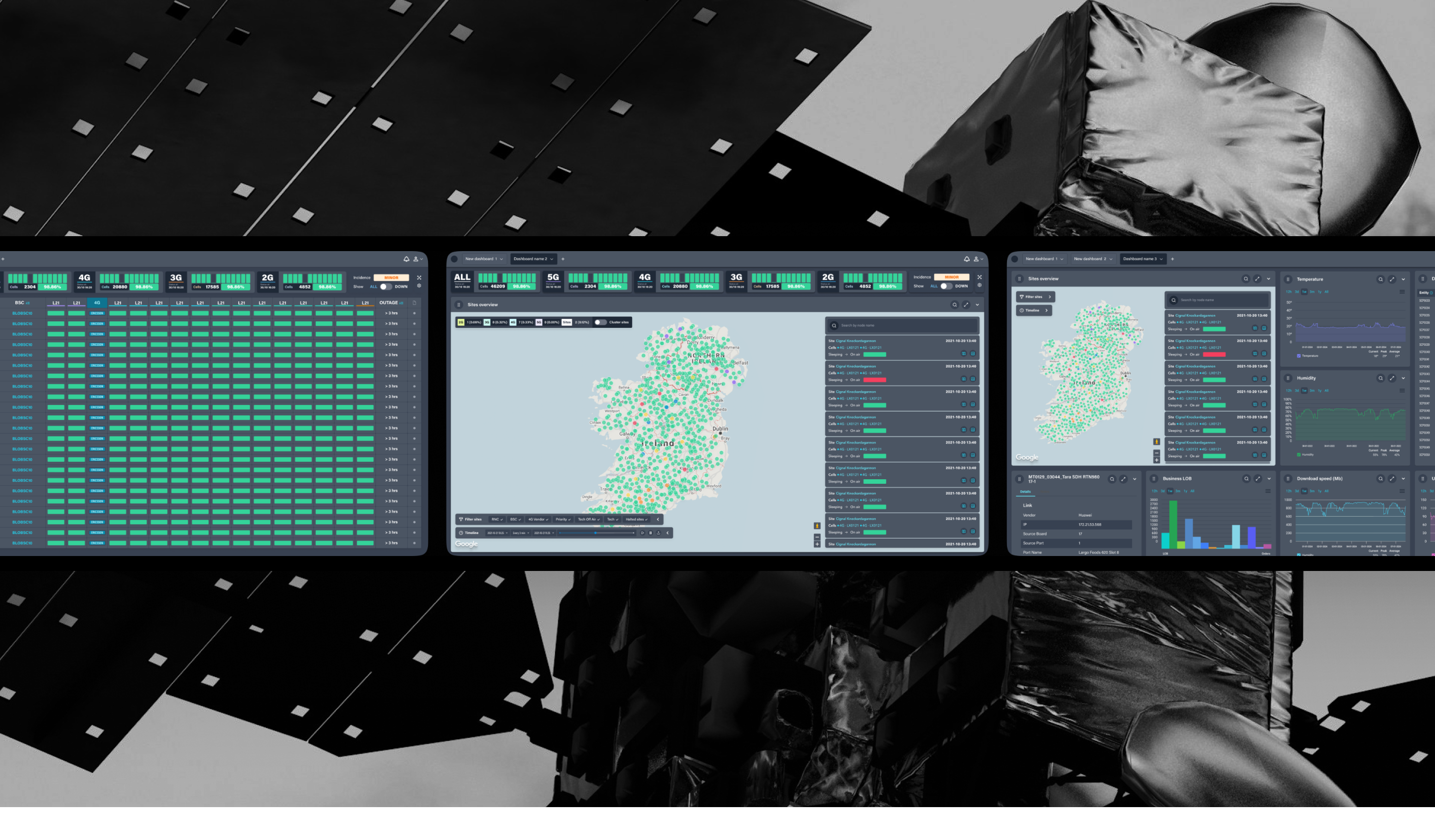
"The product was sold as a platform. It was delivered as a service. The design work was to make it actually become the platform it claimed to be."
VisiMetrix had real customers and real results. Three Ireland, eir, and Vodafone were using it to monitor and respond to network issues. The product had earned an Emerging Product of the Year award at the Analytics Institute. By any measure, it was working.
But every customer was a project.
Getting a telecom operator from contract to live required deep Sonalake involvement at every step: configuring the product to match the client's network topology, data sources, KPIs, and operational structure. Every deployment was handcrafted. Every change after go-live required Sonalake engineers to execute it.
This wasn't a UX problem. It was a scalability one.
The longer the onboarding, the higher the cost of every new client. The more Sonalake resources required to maintain each deployment, the less time those resources had to build. And from the customer's side: a path to go live that was unnecessarily long, complex, and dependent on a third party for every adjustment.
The transformation required wasn't cosmetic. It required rethinking the product from the core: how it was architected, how it was configured, how it was sold, and how it was experienced by two fundamentally different user groups simultaneously.
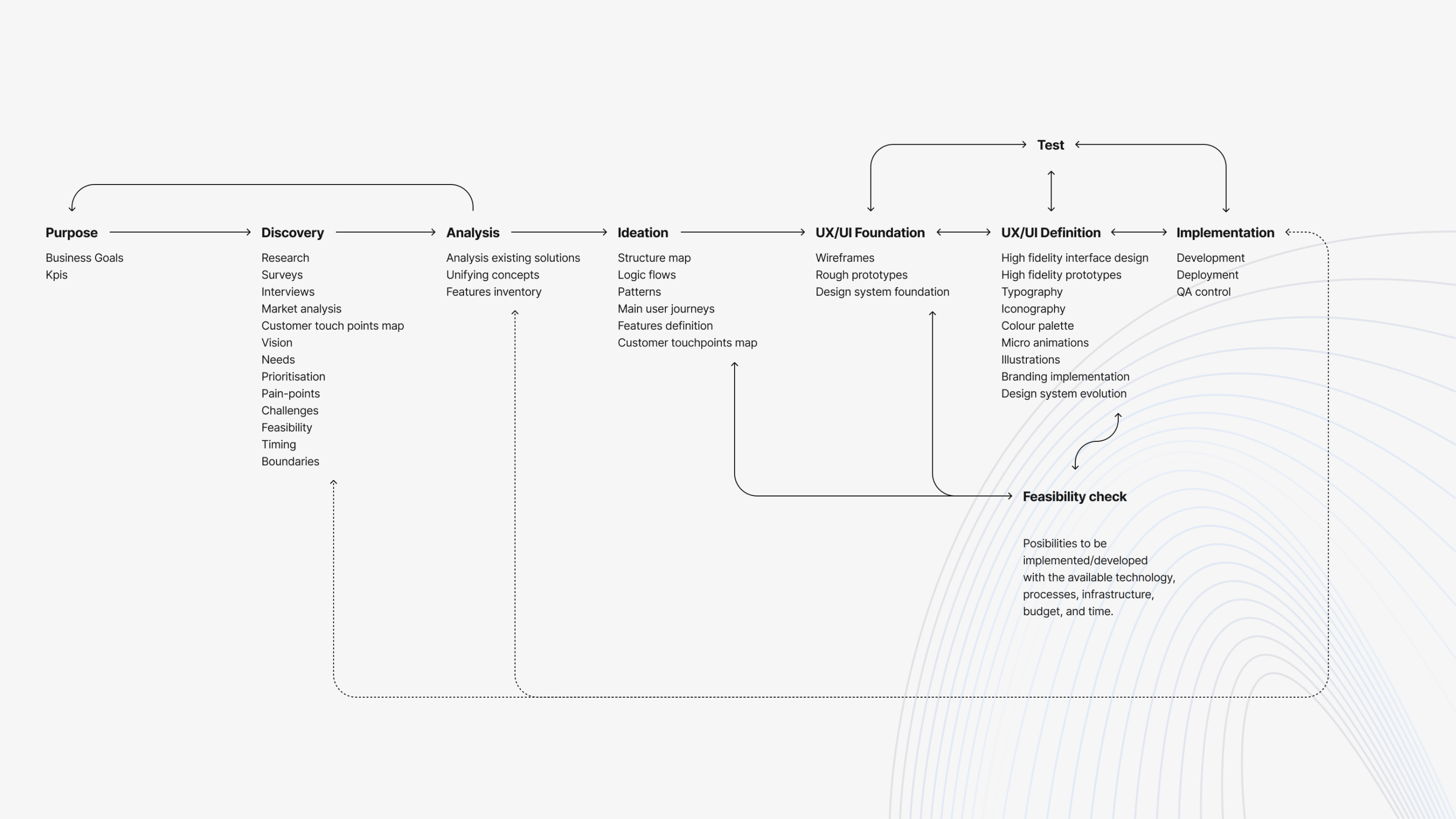
Design process
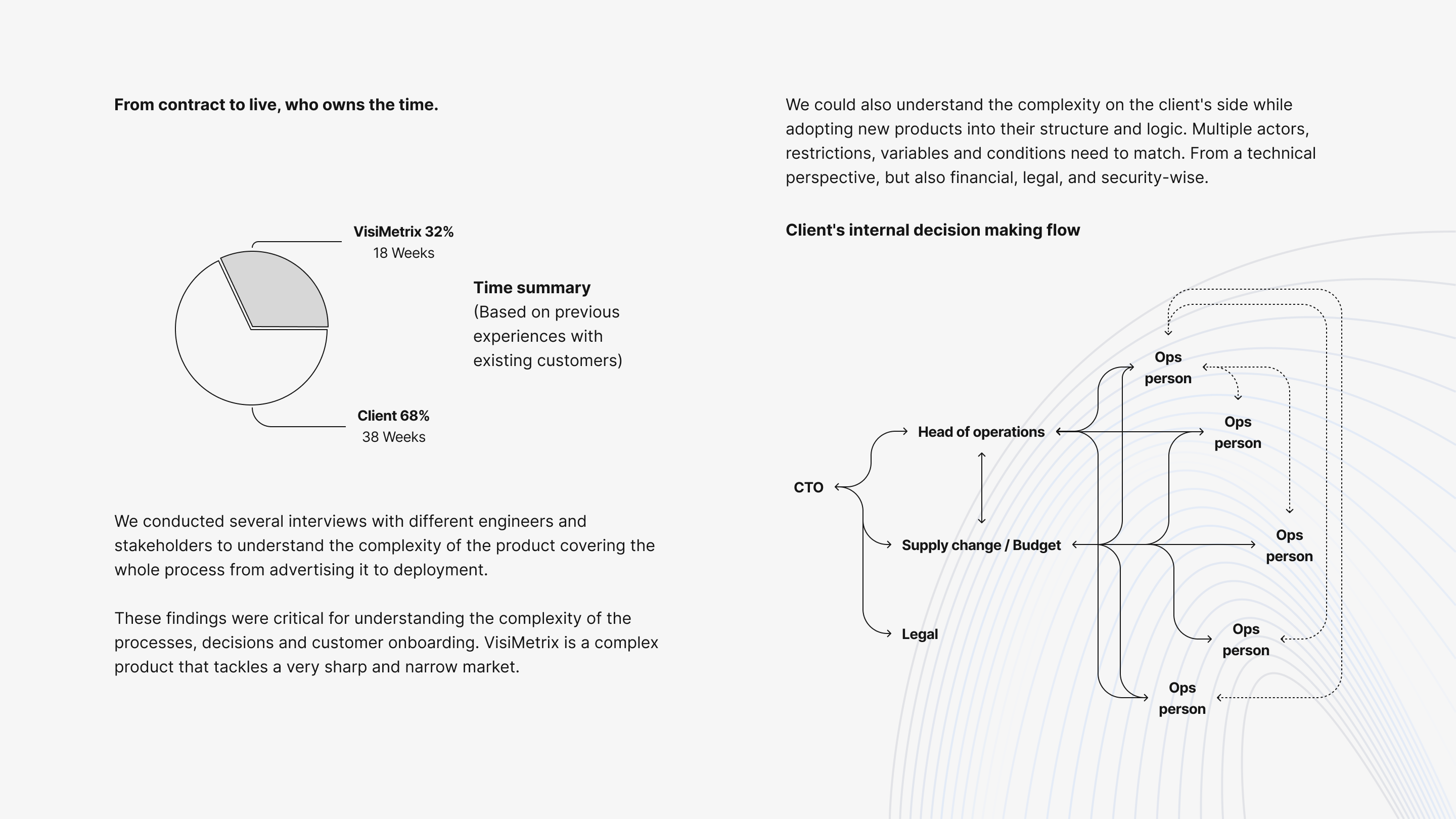
Timing and client’s internal decision making found in the discovery phase
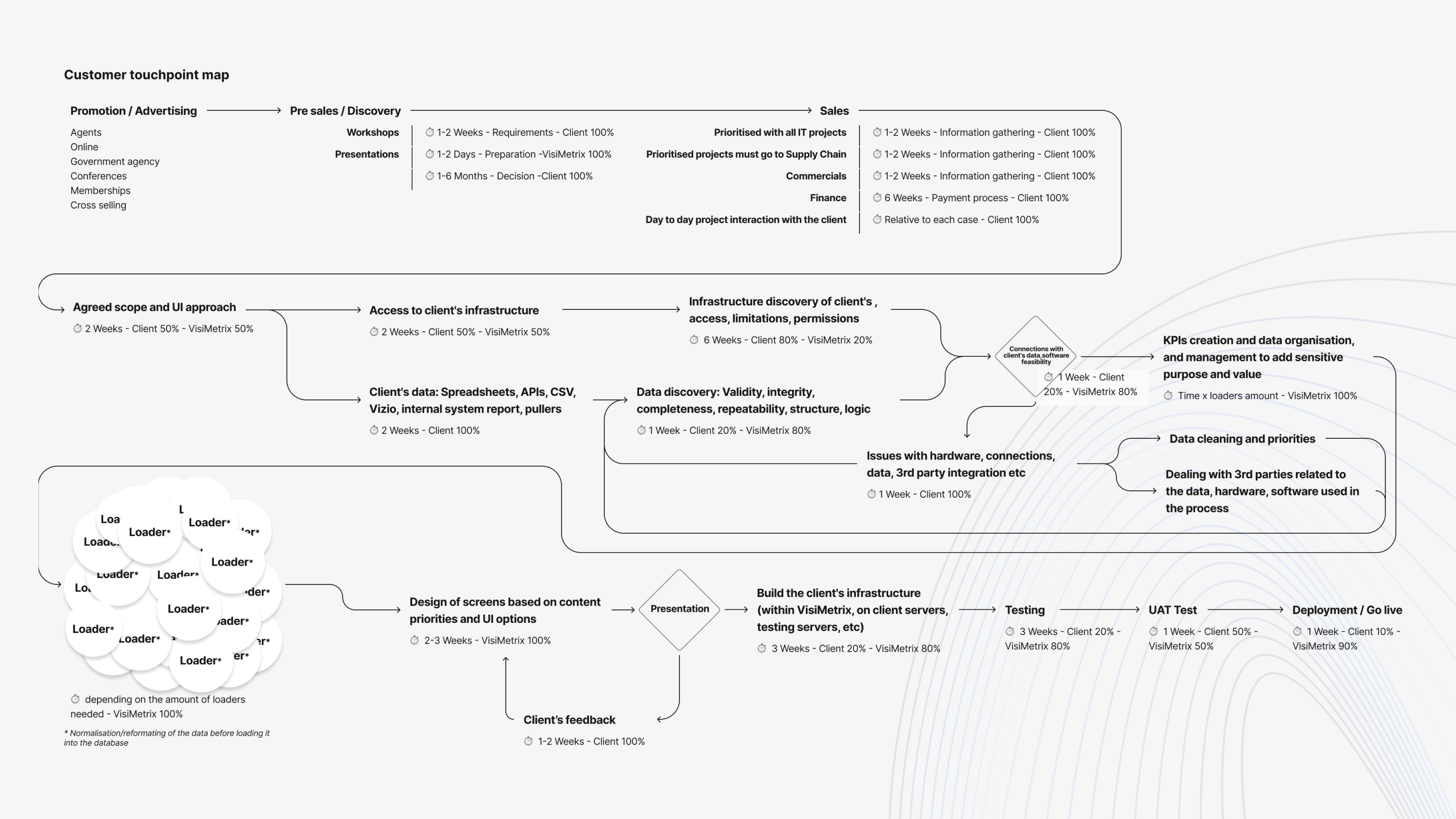
Customer and implementation touchpoint
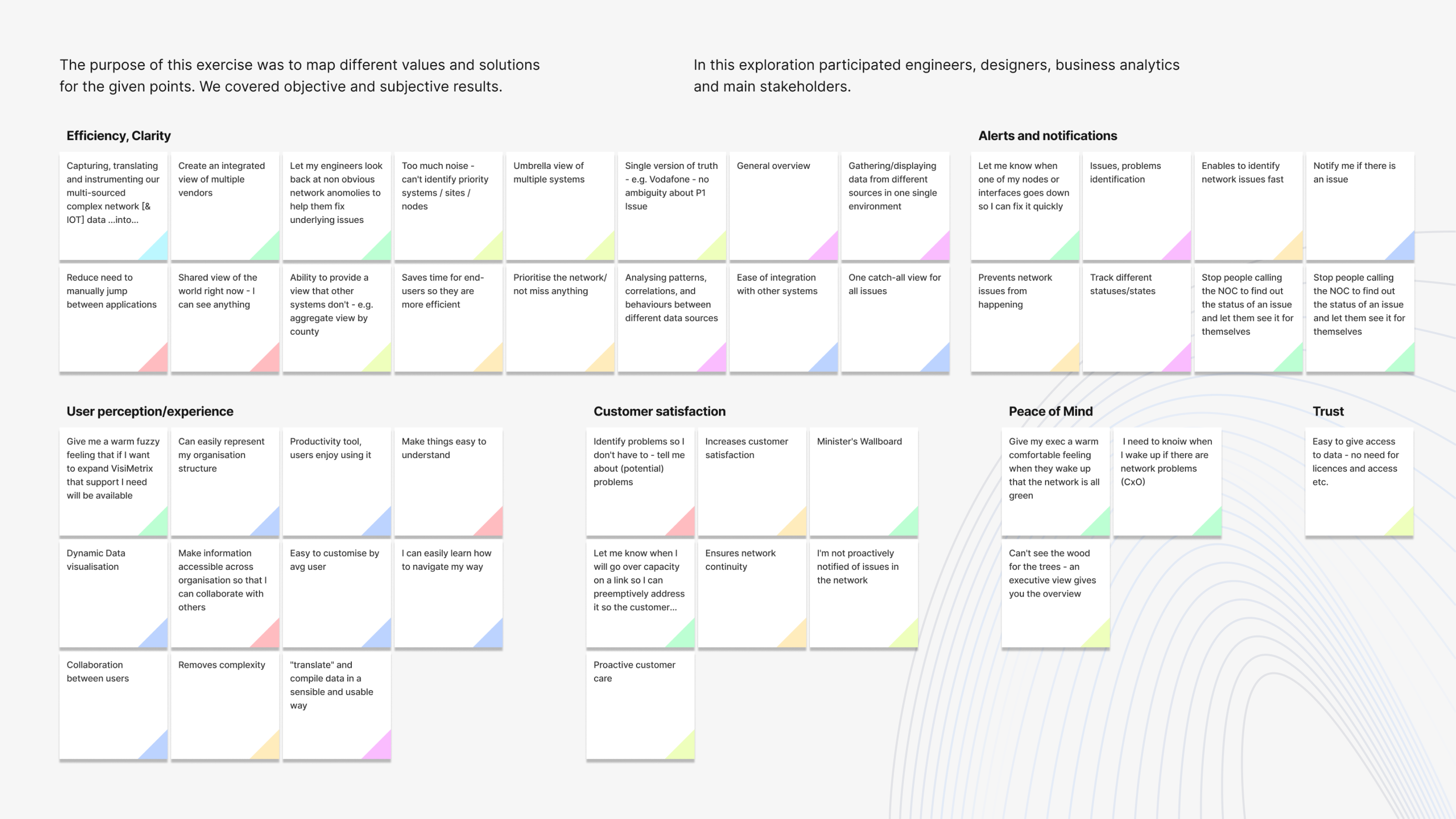
Stakeholders workshopw
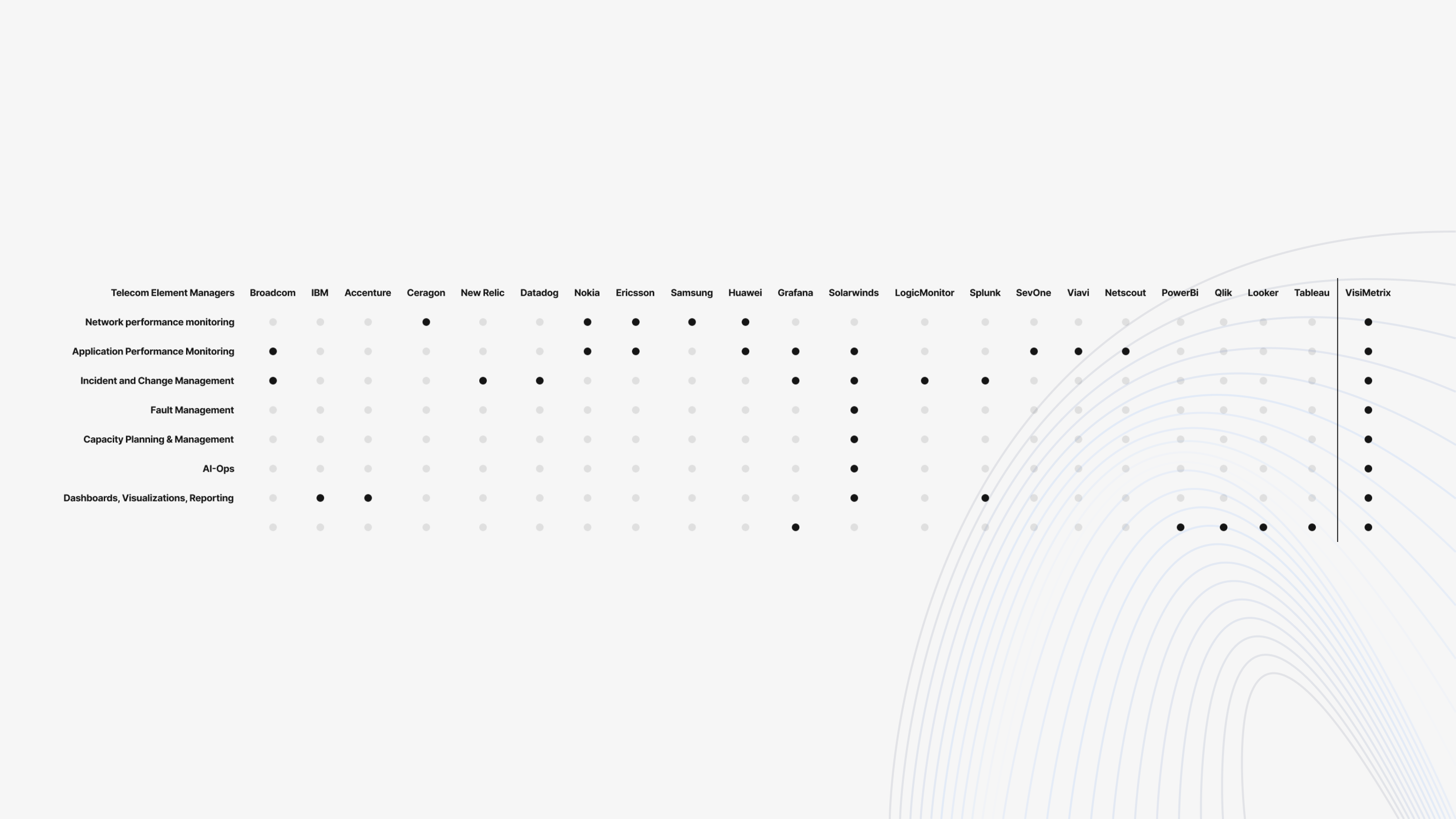
Market analysis about Visimetrix competitors
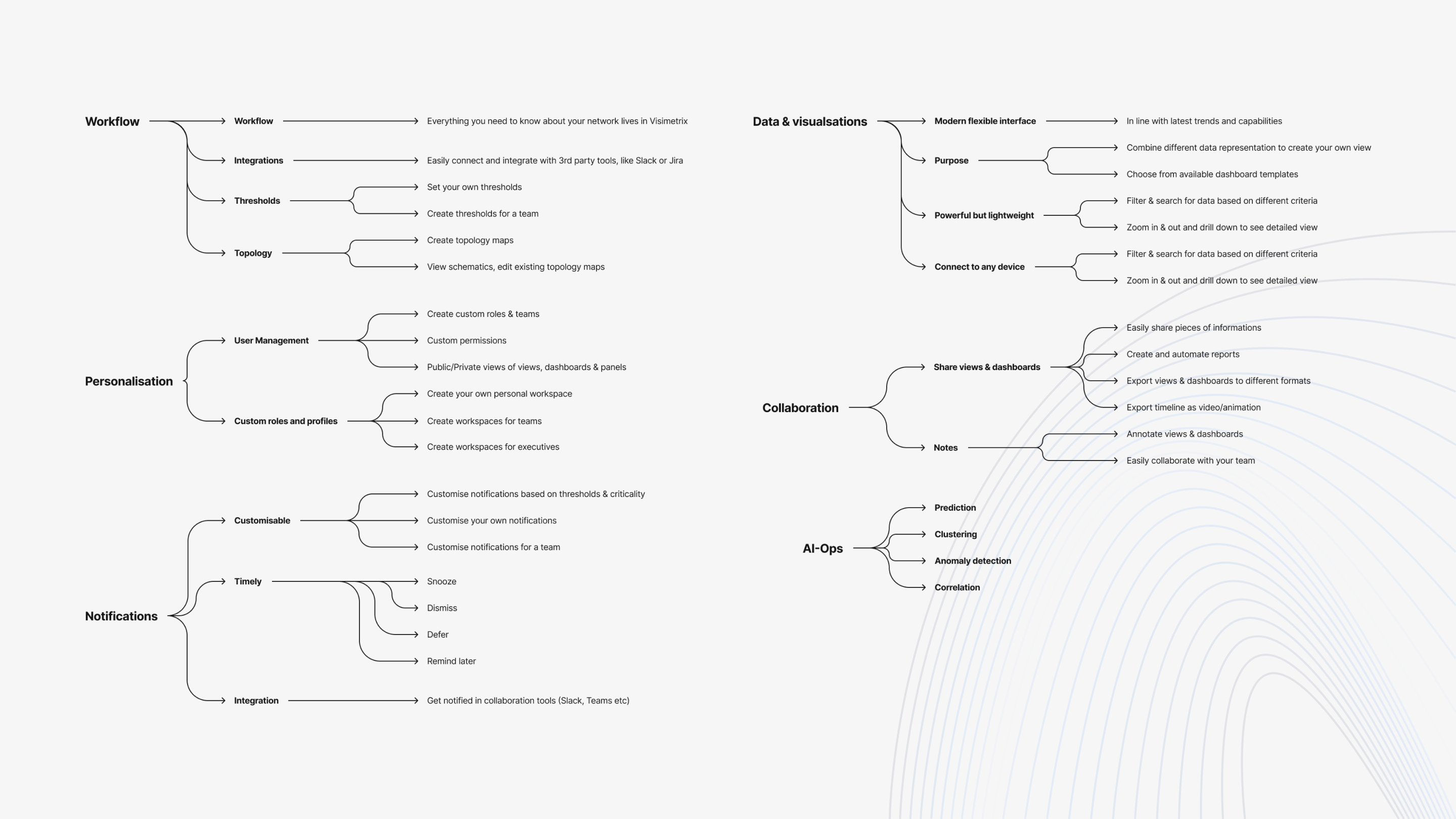
Features prioritisation
VisiMetrix serves two user groups of the same product, and they have almost nothing in common.
Customer side: The Operator · NOC Engineer · Service Assurance Manager · Network Operations Manager
Monitors network performance in real time, often across thousands of nodes. Works in environments where a missed alert means a customer-facing outage. Needs: clear signal over noise, fast drill-down from anomaly to root cause, reliable thresholds and alerting.
Customer side: The Executive · Head of Network Operations · VP Technology · CTO
Doesn't want to read KPIs. It needs to know if the network is healthy at a glance. Needs: a single, trusted view of service status that doesn't require interpretation. Research consistently showed this user needed less information, presented with more clarity, not more data.
Sonalake side: The Implementer · Engineer · Solution Architect · Professional Services
Configures and deploys VisiMetrix for new clients. In the old model, this role was the bottleneck: required for every customisation, every data source integration, every change post-launch. In the new model, the goal was to eliminate the dependency: make the platform configurable enough that this role sets things up once, not continuously.
Sonalake side: The Internal Stakeholder · Product · Sales · Marketing · Leadership
Sells, positions, and evolves the product. Needed a platform that could be demonstrated, scoped, and sold without being explained as a bespoke engagement. The architecture of the product directly affects the sales narrative.
"A product complex enough to handle enterprise telecom environments, simple enough for a NOC operator to use under pressure, and configurable enough to serve every client without requiring an engineer for every change."
Three decisions defined the transformation from custom product to scalable platform.
System-First Architecture
The product had been built per client, not as a system: all hardcoded for each deployment. The core of the systemic upgrade was defining the connective logic of the product: how components, devices, features, settings, and services relate to each other within a given client environment.
This connection model became the blueprint that made every deployment reproducible. Sonalake engineers and the client's technical team could configure any new environment by following the same defined structure, rather than rebuilding the logic from scratch each time.
Configuration over Customisation
In the old model, adapting VisiMetrix to a new client meant customisation: Sonalake engineers writing client-specific logic. In the new model, the same adaptations are handled through configuration: options the client controls themselves, within a system designed to accommodate them.
The design work was to identify every point of customisation in existing deployments, and turn each one into a configurable parameter. KPI groupings, threshold rules, dashboard layouts, data source mappings, user roles and permissions. Everything a client needed to adapt became a setting, not a project.
Progressive Complexity by Role
The same platform serves a NOC operator managing thousands of cells and a CEO who needs to know if the network is green or red. A single information architecture can't serve both without one of them suffering.
The solution was role-sensitive progressive complexity: the same underlying data presented at different levels of detail depending on who is looking at it. Executives see one readable status. Operators see thresholds, alerts, and drill-down capability. Engineers see raw counters, configuration access, and data source controls.
Feature-first architecture reflects how a product team thinks. System-first architecture reflects how users already think about their work.
Information Architecture
Before any visual design, the logic had to be restructured around a systemic approach. The old structure reflected the ad-hoc growth of a custom product: sections and features added per client, without a coherent model. The new structure is derived from user roles and needs, built on a shared foundation.
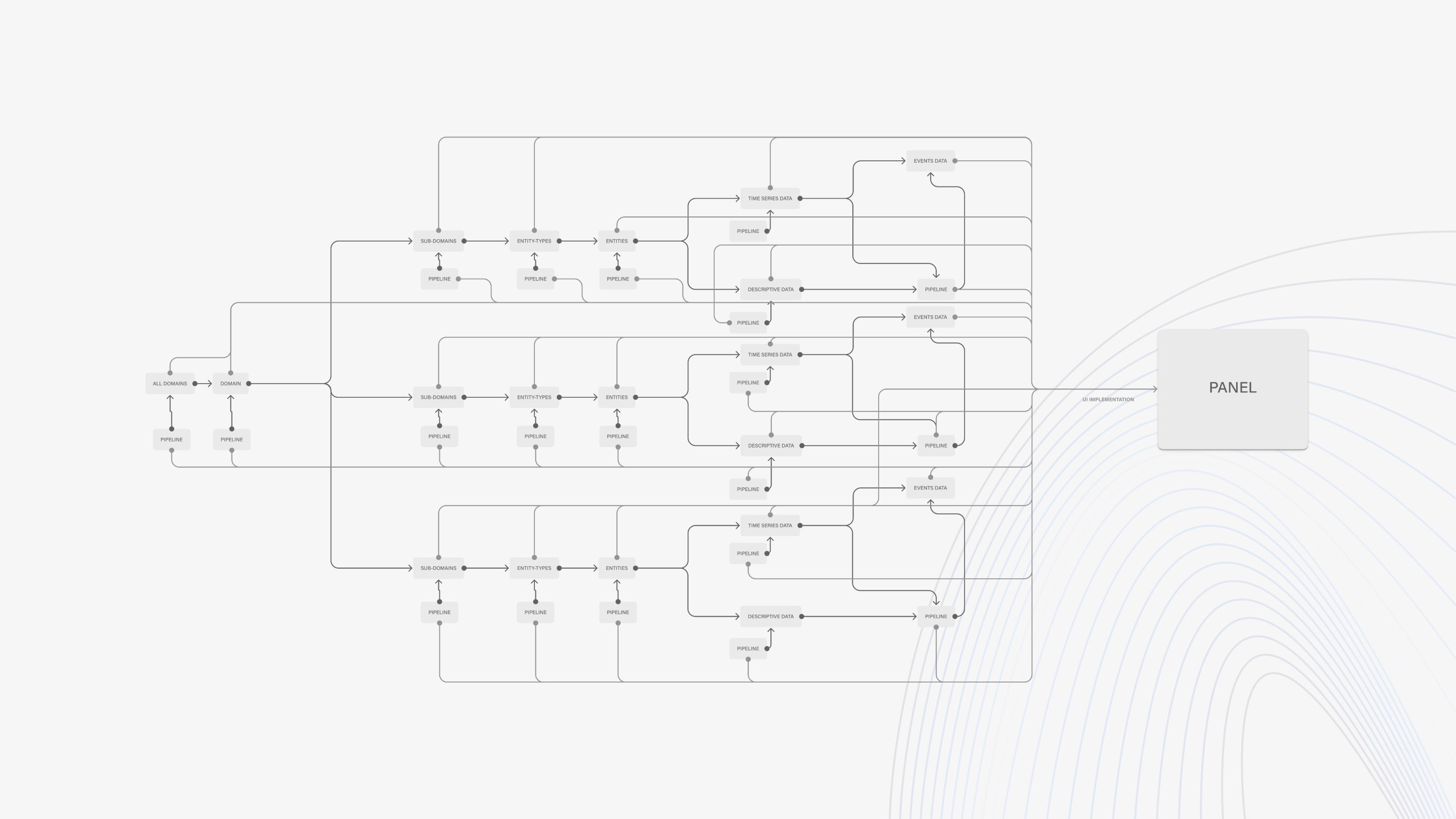
Information architecture
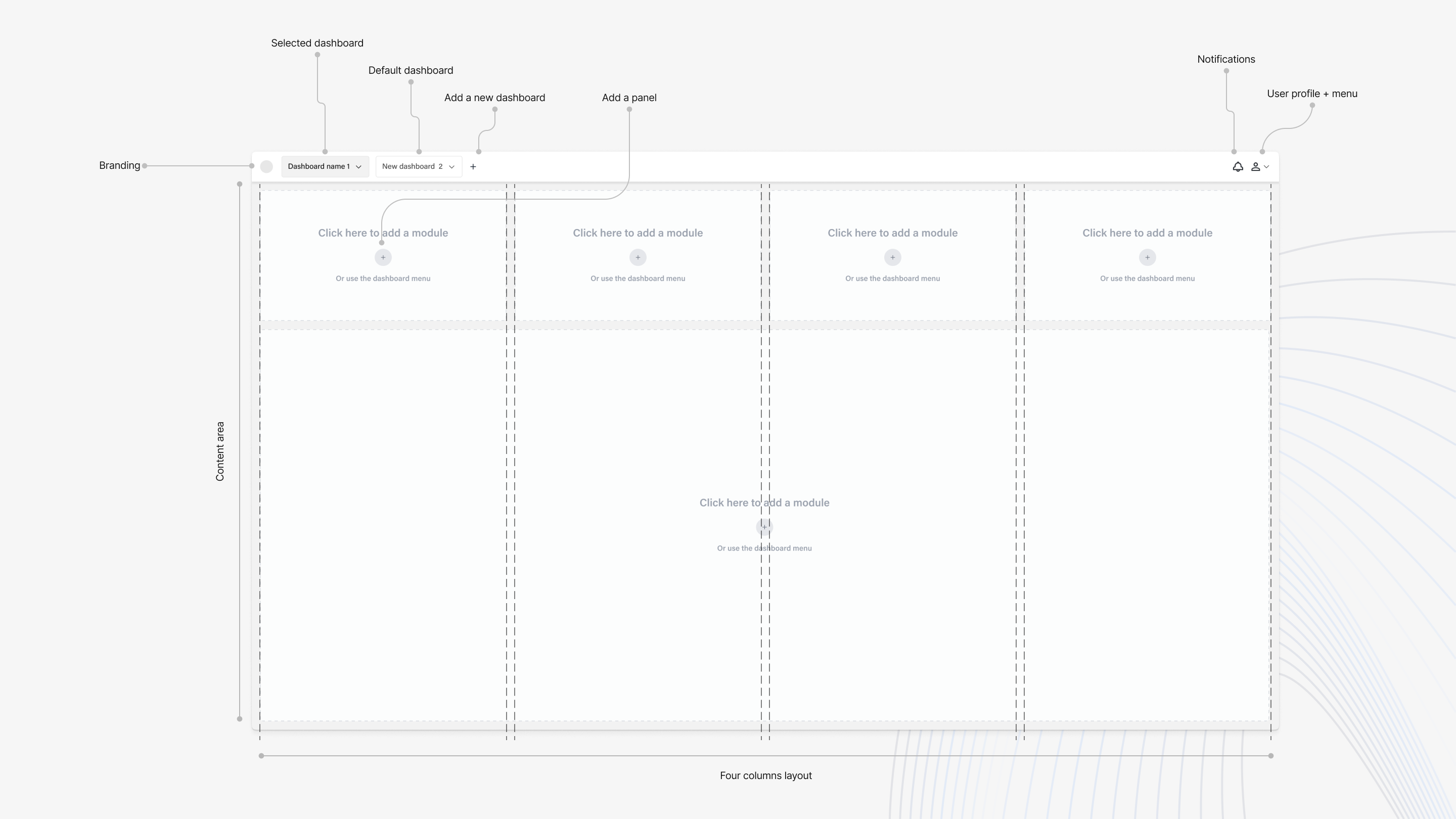
Wireframes
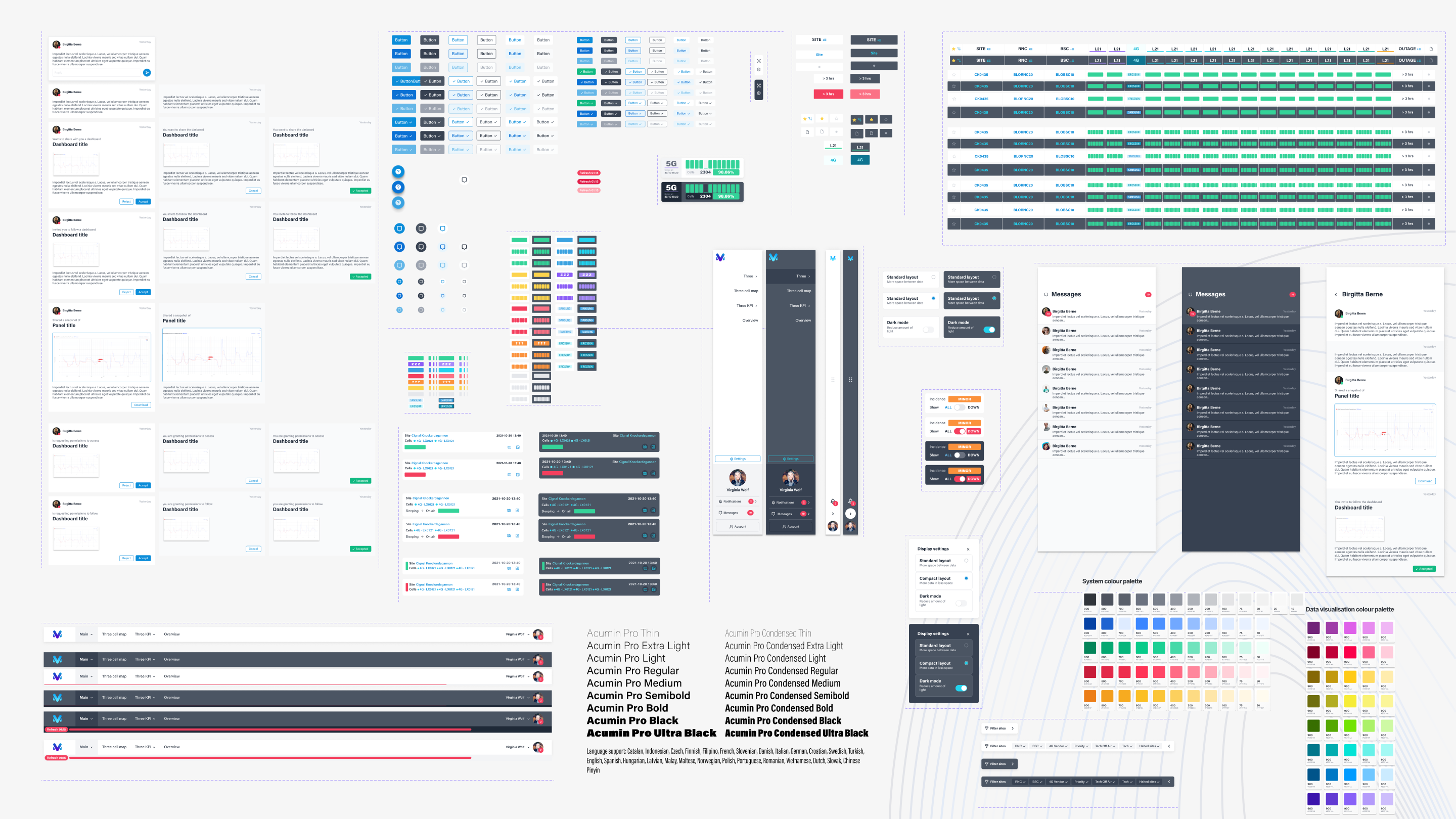
Modular design system detail
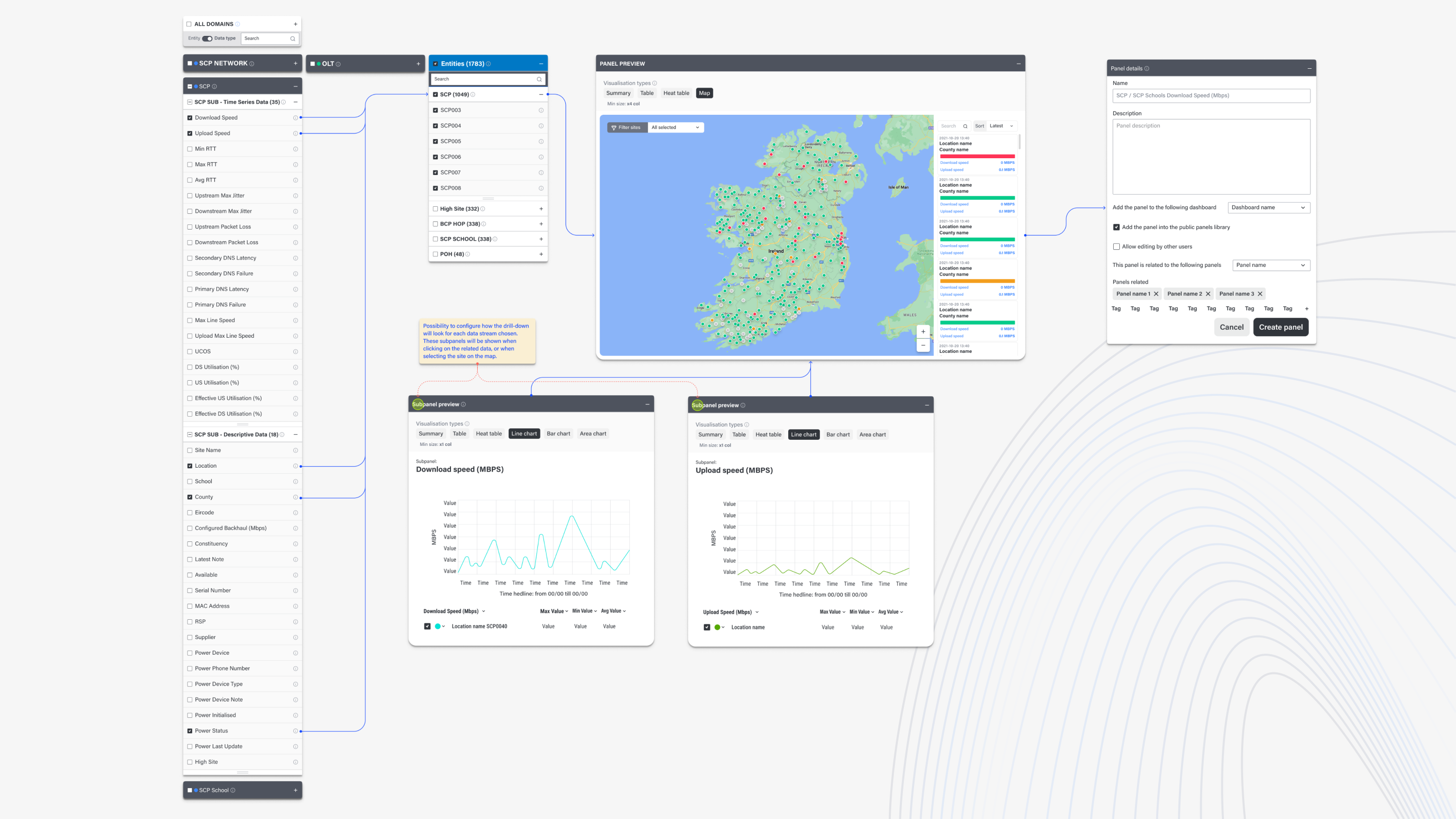
Node connection logic for the user to build their own component
The final interface serves the full range of users, from the executive who checks in once a day to the NOC operator who lives in the product.
The interface translates the modular system into a visual language built for sustained professional use. NOC operators spend hours inside this product. Every visual decision (density, contrast, colour coding, information hierarchy) was made with that context in mind.
The dark theme is not only aesthetic: it reduces eye strain in low-light NOC environments and improves the readability of status indicators and alert colours against a dark background. The responsive layout extends the executive dashboard to different screen resolutions, so network health is accessible outside the operations room without a degraded experience.
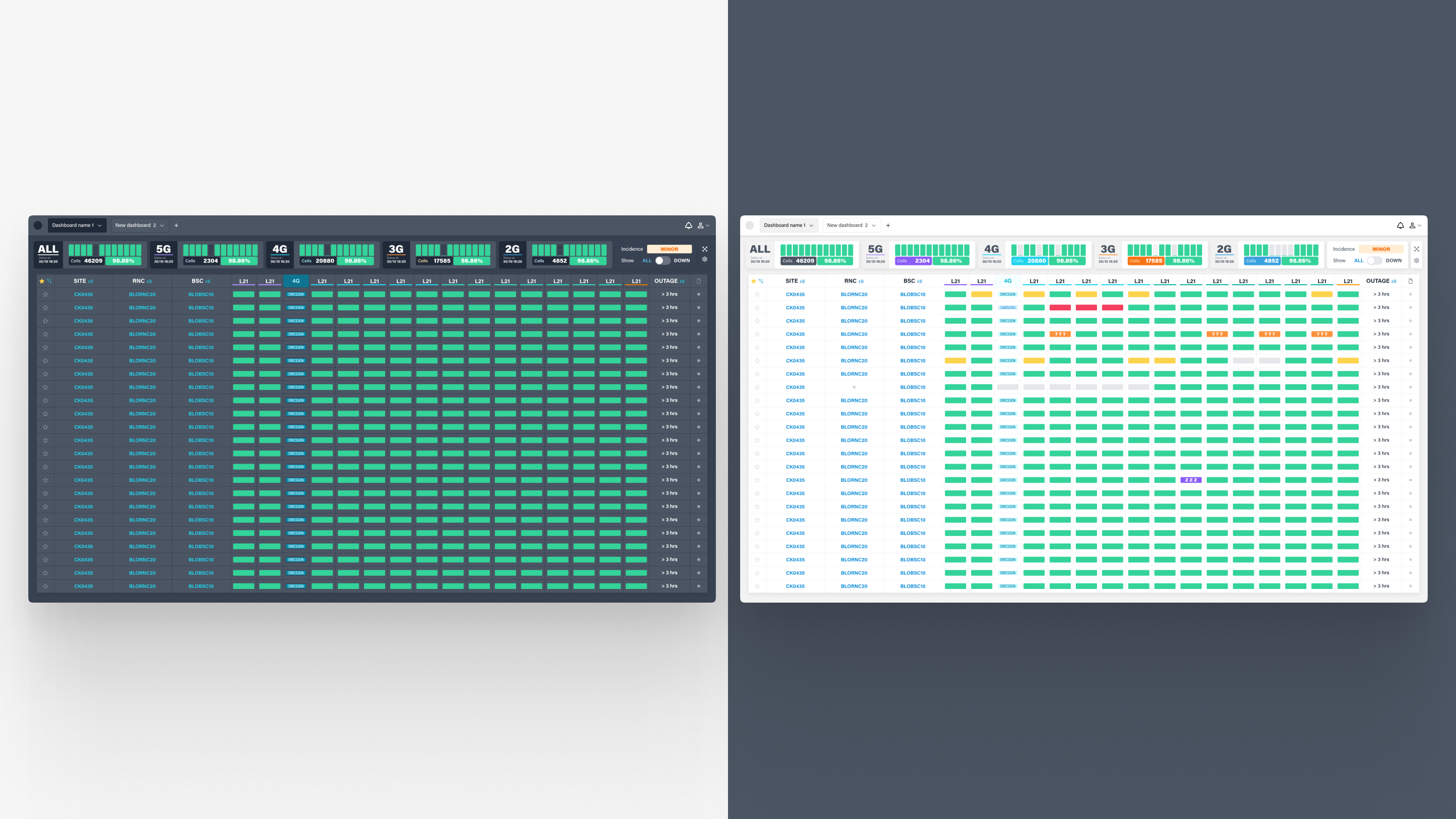
Dashboard
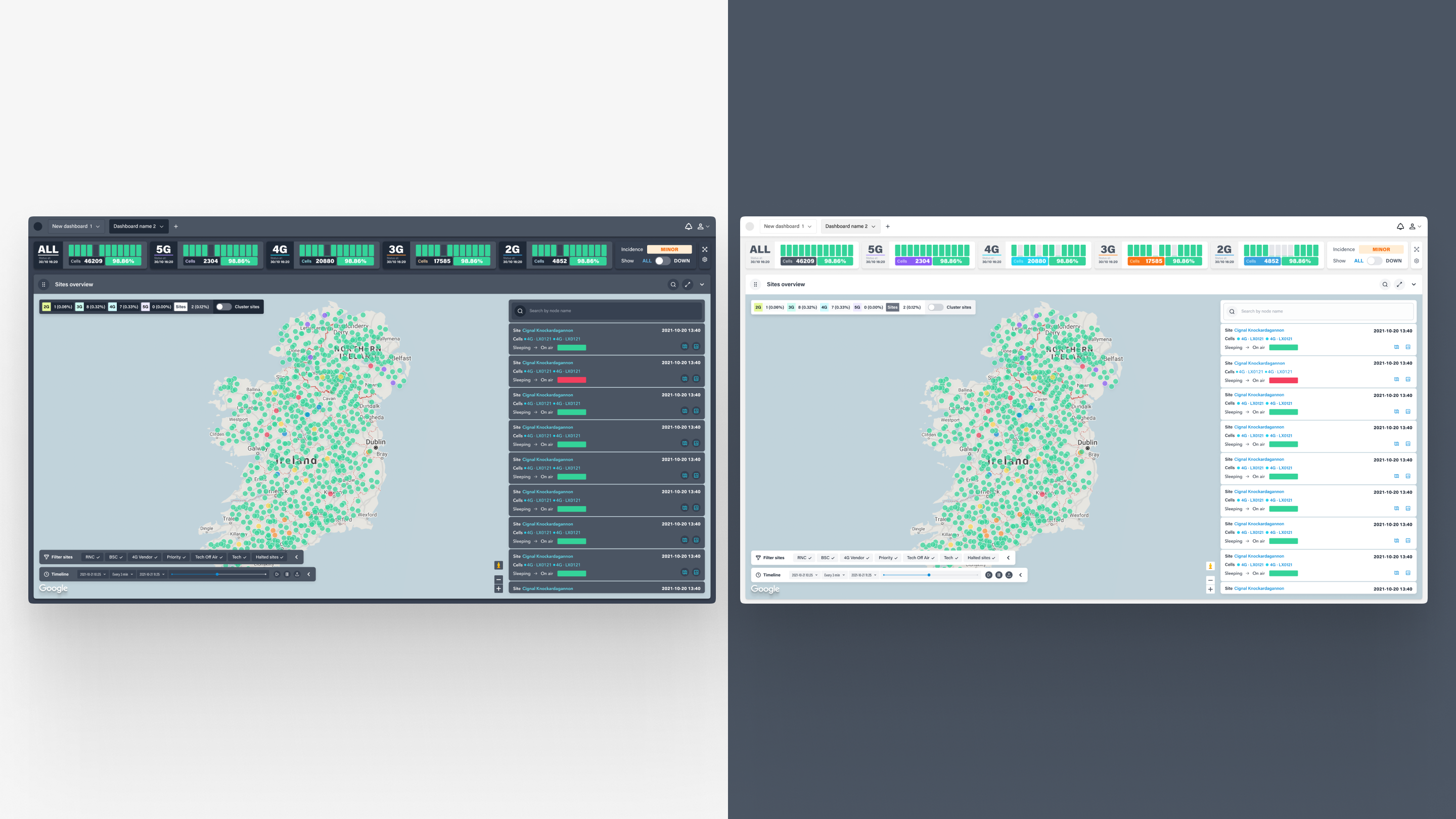
Map and incidences dashboard
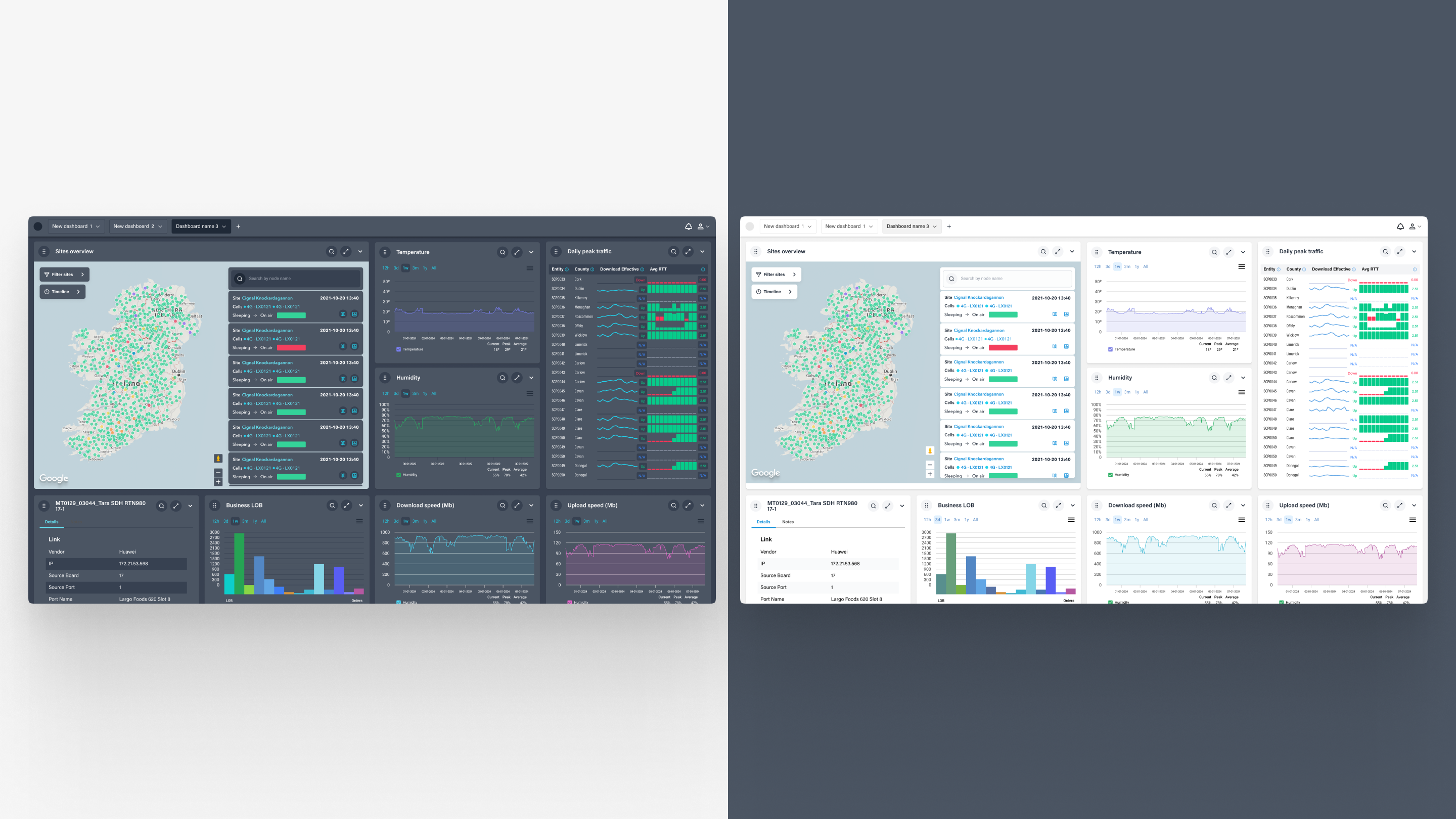
Dasboard alternative
The work done transformed a highly capable but handcrafted platform into a dynamic, scalable, and systemic product.
The product that came out of this project is structurally different from the one that went in. From one handcrafted version per client, to a single product capable of serving every client's needs today and adapting to whatever comes next.
The shift from custom instance to configurable platform changed the very core of VisiMetrix and how it is sold, implemented, and maintained. At the centre of that shift was a defined connection model: the design blueprint for how every component, device, feature, setting, and service relates within a client's environment.
For customers, the result is a faster path to value and genuine operational independence after go-live. For Sonalake, it means the engineering investment in one client's deployment compounds into the platform rather than disappearing into a one-off configuration.
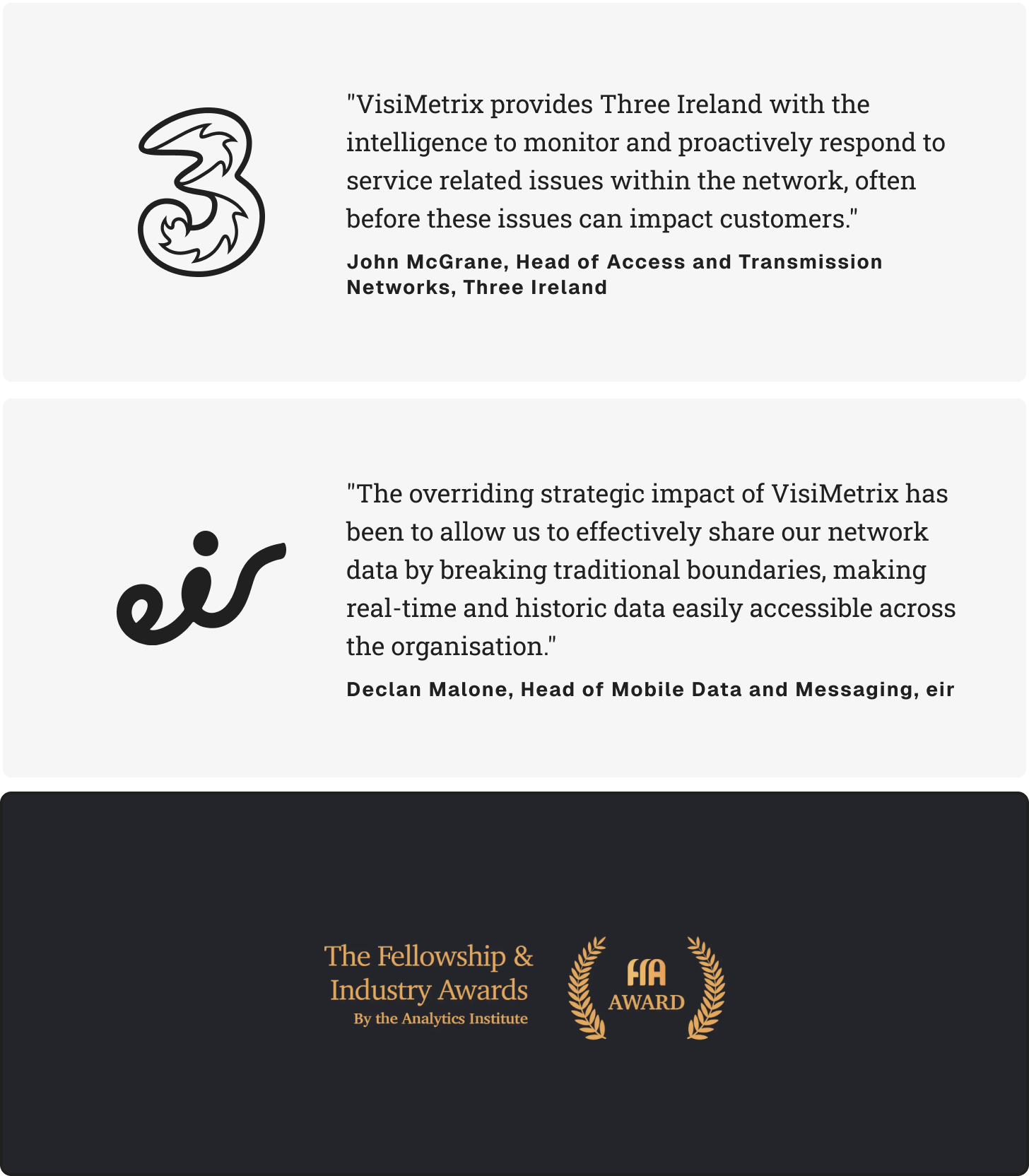
VisiMetrix was named Emerging Product of the Year at the Analytics Institute Fellowship & Industry Awards. Clients including Three Ireland, eir, and Vodafone are active users.
The most important shift in this project was recognising that the design problem wasn't only in the interface and user experience: it was in the approach of how the platform was built, sold, and implemented.
A product that requires expert intervention for every client change isn't a SaaS product. It's a consultancy with a dashboard. Changing that required making decisions that were as much about product strategy as UX: what should clients control, what should they not, where does configuration end and customisation begin.
The value of a designer in that room is to make the product's complexity invisible to the people who shouldn't have to deal with it.
None of this would have been possible without the Sonalake team. Their openness, technical generosity, and consistently positive attitude throughout the process made the hard work feel collaborative rather than confrontational.
